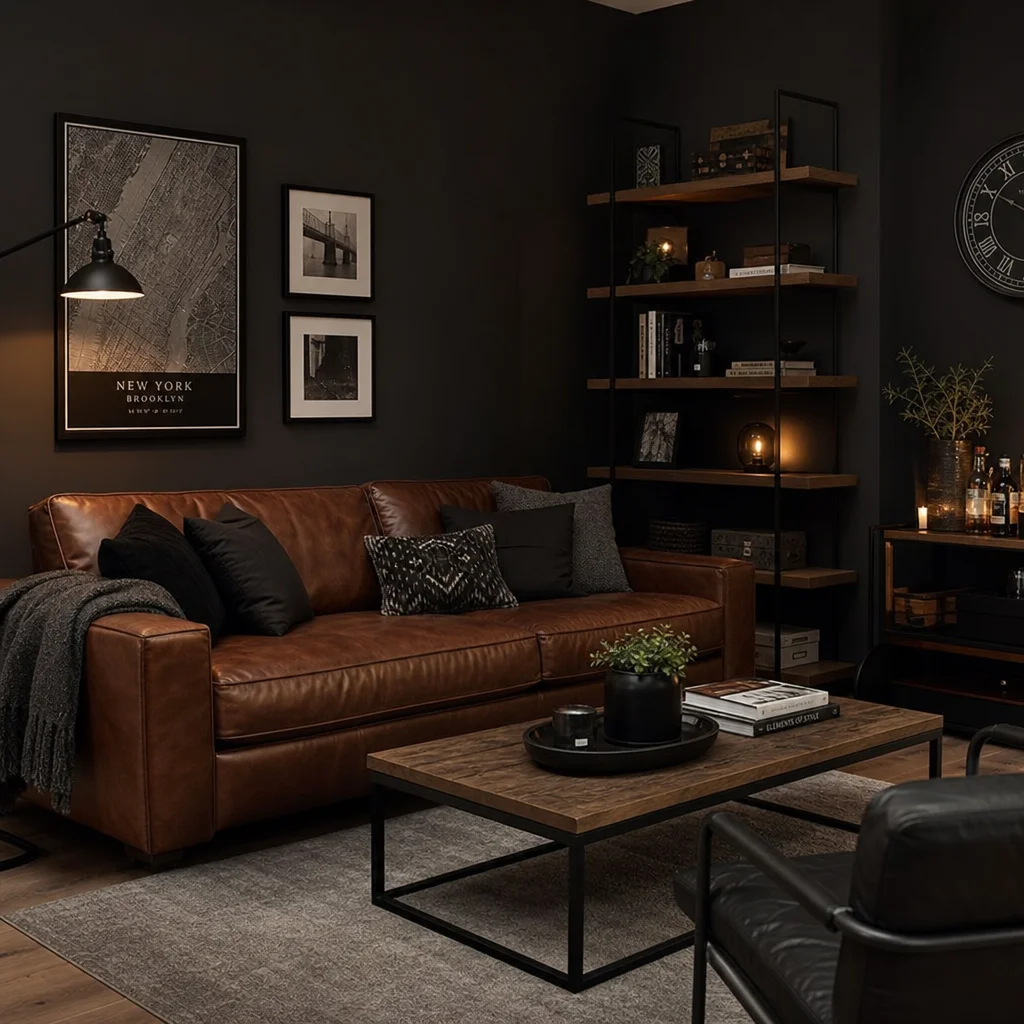
Stylish Masculine Room Decor Ideas & Guide
Transform your living space with sophisticated masculine room decor. Discover modern ideas for a stylish bachelor bedroom, living room, and home office.
8 min read
Rooms rarely feel bad because of furniture — more often they are simply underlit. Lighting needs vary enormously by activity: a kitchen worktop wants several times the light of a cozy living room, and getting the total lumens right matters more than any single fixture choice.
This calculator estimates the total lumens your room needs from its size and how you use it, then converts that into a fixture or bulb count so you can plan ceiling lights, lamps, and layers with confidence.
Measure the room’s length and width in feet to get its floor area.
Choose the room’s primary use — kitchens and bathrooms need strong task lighting, home offices need focused working light, and living rooms and bedrooms need softer ambient levels.
Enter the lumen output of the bulbs or fixtures you plan to use; it is printed on every bulb package (an 800-lumen bulb is the classic 60-watt equivalent).
The calculator gives total lumens and the number of bulbs needed. Spread them across at least two layers — ambient ceiling light plus lamps or task lights — rather than one bright central fixture.
Lighting professionals size rooms in foot-candles (one lumen per square foot). This calculator multiplies your floor area by the recommended foot-candle level for the room type: about 70 for kitchens and bathrooms where task lighting matters, 50 for home offices, and 15–20 for living rooms, bedrooms, and dining rooms where atmosphere leads. Prefer your own numbers? Pick the custom target option and set any foot-candle level, and enter the exact lumen output of your bulbs.
Total lumens ÷ your bulb’s lumen output, rounded up, gives the bulb count. Two practical adjustments: dark walls and floors absorb light, so add roughly 10–20% for moody color schemes; and dimmers effectively let one room serve multiple light levels, so when in doubt, install the higher count on a dimmer.
It depends on the room: roughly 70 lumens per square foot for kitchens and bathrooms, 50 for home offices, and 15 to 20 for living rooms, bedrooms, and dining rooms. Task areas within a room can layer extra light on top.
An 800-lumen LED is the standard 60-watt-equivalent bulb. Brighter household options include 1100 lumens (75W equivalent) and 1600 lumens (100W equivalent); many recessed LED fixtures output 600 to 1000 lumens each.
A typical 12 by 18 foot living room (216 square feet) at 15 to 20 foot-candles needs roughly 3,200 to 4,300 total lumens — for example four to five 800-lumen bulbs spread across ceiling fixtures and lamps.
Rarely. Even when it meets the lumen total, a single source creates flat light and hard shadows. Designers layer three types: ambient (ceiling), task (reading and work lights), and accent (picture lights, wall washers) — this calculator sizes the total across all layers.
Yes. Dark, matte surfaces absorb rather than reflect light, so rooms with deep paint colors or dark wood typically need 10 to 20 percent more lumens to feel equally bright.
Transform your living space with sophisticated masculine room decor. Discover modern ideas for a stylish bachelor bedroom, living room, and home office.

Transform your living room into a festive haven with these creative Christmas decorated living room ideas. Discover stylish tips for any space or budget.
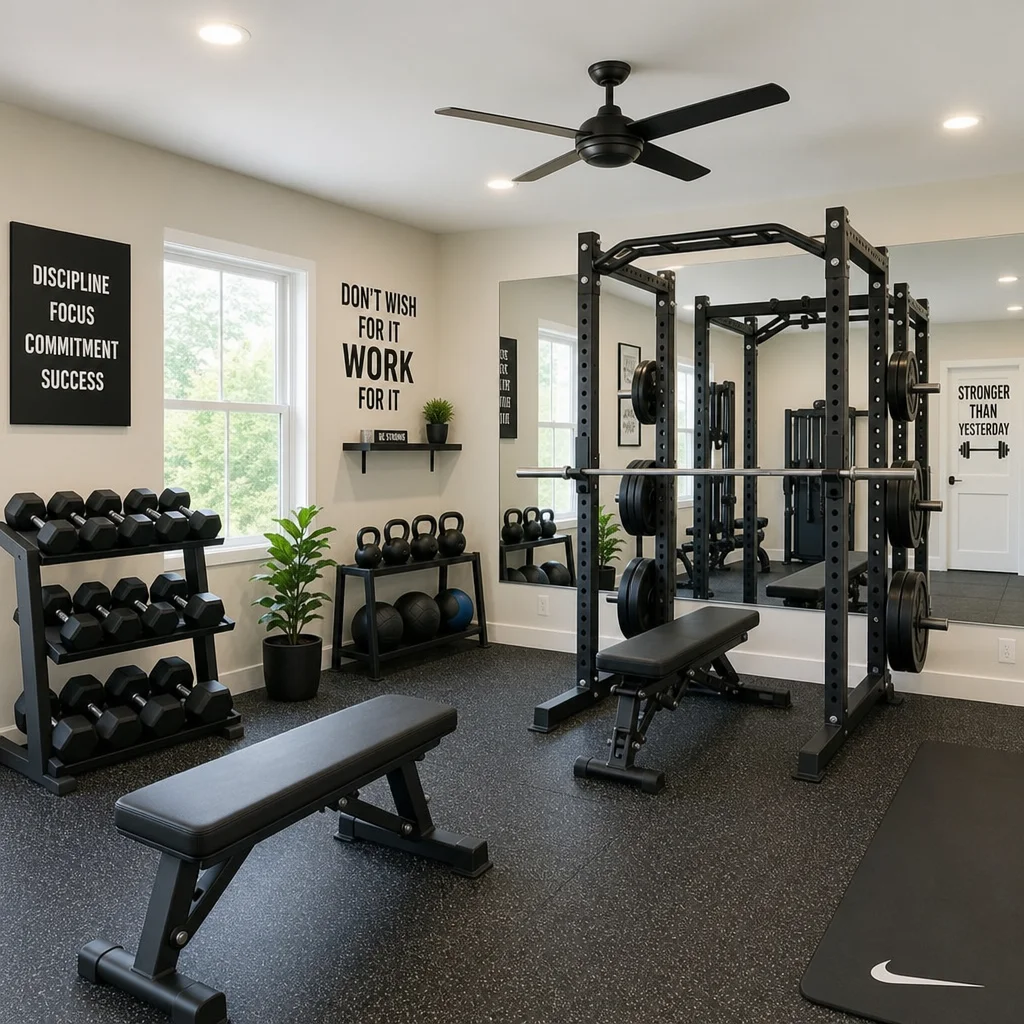
Transform your workout space with creative home gym decor ideas that inspire motivation and enhance your fitness journey.