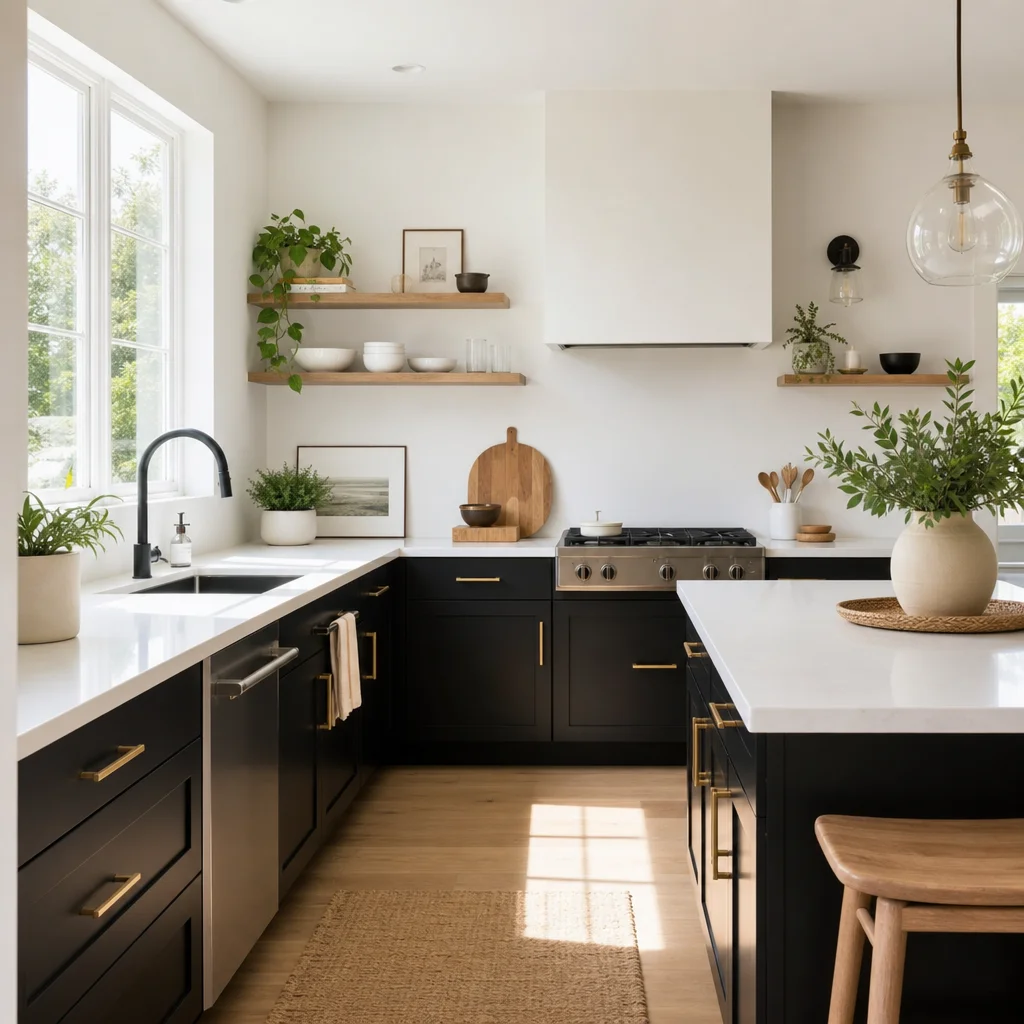
Timeless Black and White Kitchen Decor Ideas
Discover timeless sophistication with black and white kitchen decor, plus expert tips for a modern kitchen design with striking contrast.
9 min read
Tile projects live and die by the waste factor. Every cut at a wall, corner, or fixture consumes tile, and if you run out, matching a discontinued or re-batched tile months later can be nearly impossible. Buying the right surplus up front is much cheaper than it sounds.
This calculator converts your floor or wall dimensions and tile size into the number of tiles — and boxes — to buy, with the waste percentage matched to your installation pattern.
Measure the length and width of the floor (or the width and height of the wall) in feet. For L-shaped areas, split them into rectangles and run the calculator per section.
Enter the tile dimensions in inches — common sizes include 12x12, 12x24, 18x18, and 3x6 subway tile.
A straight grid layout wastes about 10 percent to cuts; diagonal, herringbone, and other angled patterns waste about 15 percent. The calculator applies the right factor.
Enter how many tiles come per box (printed on the packaging) and buy the rounded-up number of boxes, keeping spares from the same batch for future repairs.
The calculator computes the area to cover, divides it by the area of a single tile (pick a standard size or enter custom tile dimensions), and then applies your waste allowance: 10% suits straight/grid layouts, 15% diagonal or herringbone patterns where every edge row needs angled cuts — but the percentage is fully adjustable. The result is rounded up to whole tiles and then to whole boxes based on your tiles-per-box count.
Grout lines are intentionally ignored — the standard industry practice — because the few square inches they add per tile function as extra buffer rather than a reason to buy less. For rooms with many fixtures, niches, or curves (a bathroom floor around a toilet flange and vanity, for example), treat 15% as your minimum waste even in a straight layout.
Buy 10 percent extra for a straight grid layout and 15 percent for diagonal or herringbone patterns. Complex rooms with many cuts, or large-format tiles, justify the higher figure even in a straight layout.
A 10x10 room is 100 square feet, and each 12x12 tile covers exactly 1 square foot. With 10 percent waste you need 110 tiles — at a typical 10 tiles per box, that is 11 boxes.
No. Standard practice is to calculate from tile dimensions alone; the area consumed by grout lines simply becomes a small extra buffer in your favor. Never reduce your order because of grout spacing.
In herringbone and diagonal layouts, every tile meeting a wall must be cut at an angle, and the offcuts are usually unusable elsewhere in the pattern. That pushes realistic waste from about 10 percent up to 15 percent or more.
Yes — keep at least a few spare tiles from the same batch. Tile lines get discontinued and dye lots vary, so those spares are often the only way to invisibly repair a cracked tile years later.
Discover timeless sophistication with black and white kitchen decor, plus expert tips for a modern kitchen design with striking contrast.
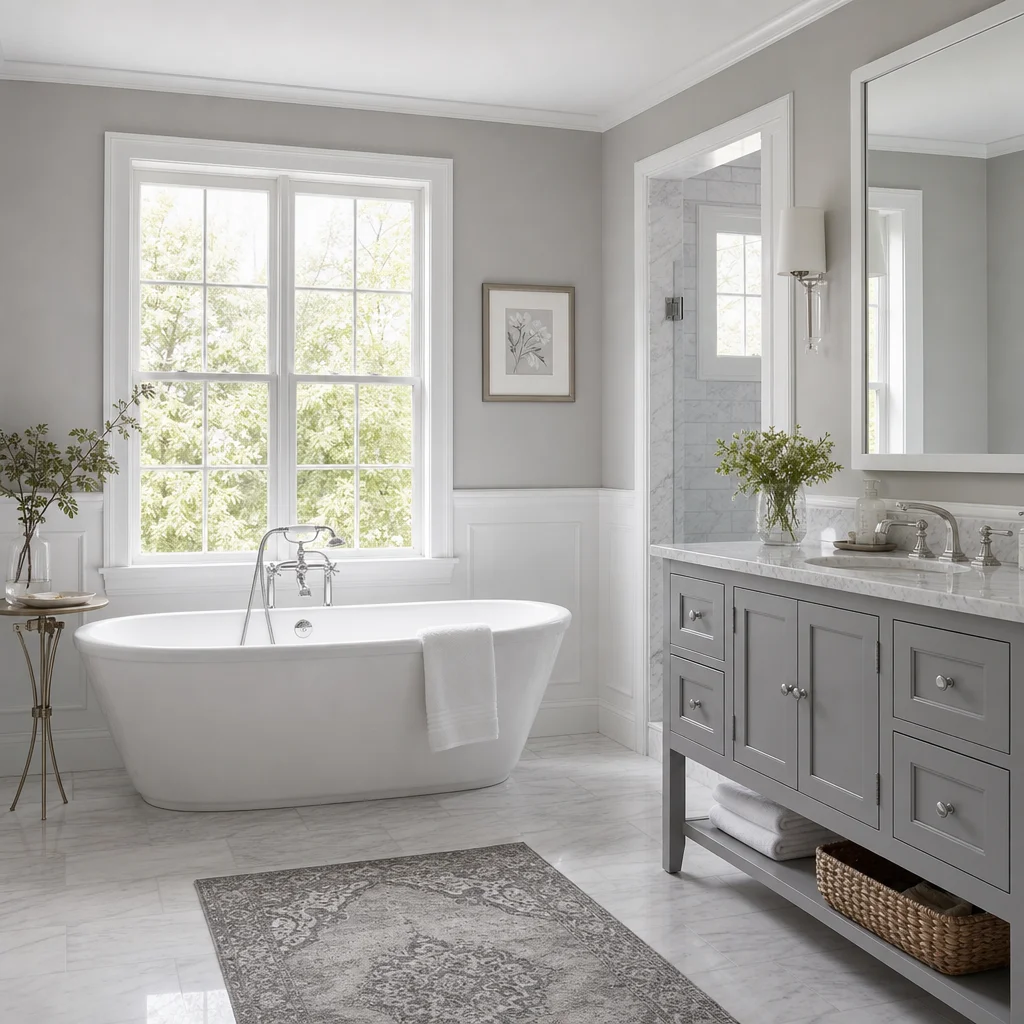
Discover stylish gray and white bathroom decorating ideas to transform your space into a modern sanctuary with elegance and versatility.
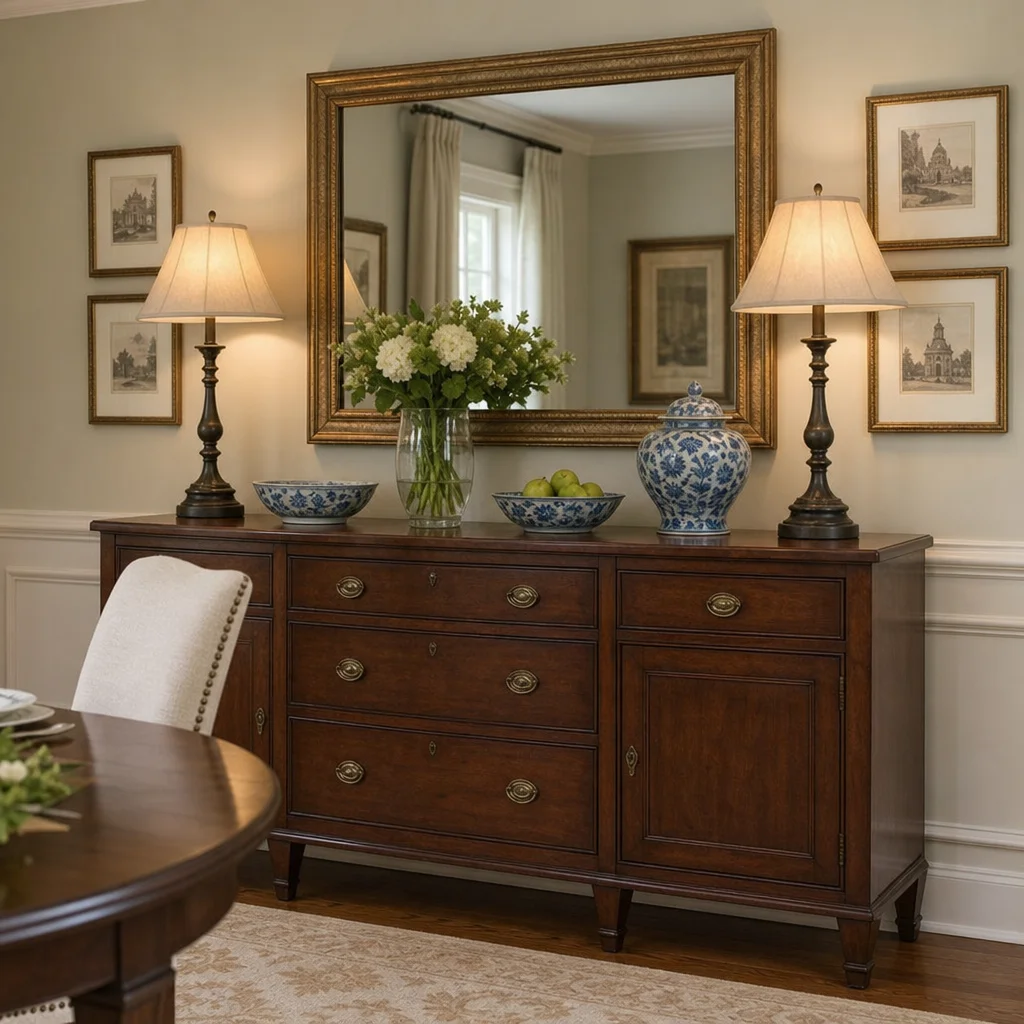
Transform your dining space with innovative buffet decor ideas, from modern styling and sideboard tips to seasonal arrangements.