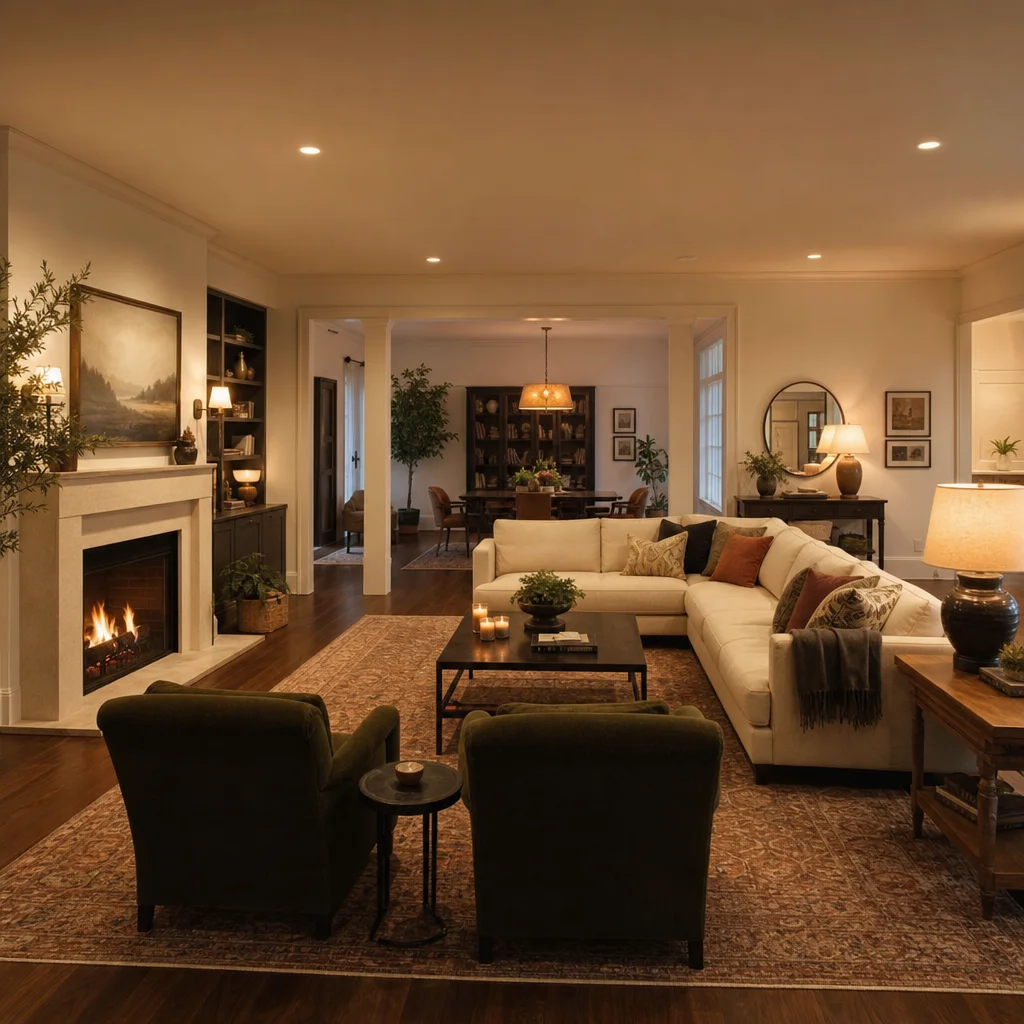
How to Decorate a Large Living Room: Expert Tips
Discover expert tips on how to decorate a large living room with style and function. Find living room inspiration for zoning, furniture, and wall decoration.
9 min read
The fastest way to make a room feel off is a rug that is too small — a postage stamp floating in front of the sofa. The right rug anchors the furniture, defines the seating zone, and makes the whole space read as larger and more intentional.
This guide recommends a standard rug size from your room dimensions and how you want furniture to sit on it. It follows the rule interior designers use everywhere: leave a consistent 18 to 24 inches of bare floor between the rug and the walls, and be deliberate about which furniture legs land on the rug.
Measure the length and width of the room — or of the zone the rug should define in an open-plan space — in feet.
Decide how furniture will meet the rug: all legs on the rug (most generous), front legs only (the most common living room look), or the rug floating within the seating area (best for small rooms).
The guide suggests the standard size that keeps 18 to 24 inches of exposed floor around the rug for your chosen layout, plus the nearest alternative if you want to size up or down.
Before buying, tape the rug outline on the floor with painter’s tape and confirm the front legs of sofas and chairs land where you expect.
The guide starts from your room size and subtracts the border of bare floor — 21 inches by default, adjustable to taste within the designer range of 18–24 inches: with an all-legs-on layout the rug reaches to within that border of the walls; with front-legs-on it shrinks by roughly another foot per side; a floating rug mainly needs to span the coffee-table zone while staying proportional to the seating.
It then snaps that target down to the nearest standard size — 5×8, 6×9, 8×10, 9×12, or 10×14 feet — because non-standard sizes are expensive and slow to source. Dining rooms are a special case handled by the same rule of thumb: the rug should extend at least 24 inches beyond the table on every side so chairs stay on the rug when pulled out.
For most living rooms, choose a rug large enough that at least the front legs of all seating rest on it, with 18 to 24 inches of bare floor between rug and walls. In practice that means an 8x10 rug for a typical 12x15 living room, and a 9x12 or larger for bigger rooms.
Any of three layouts works if done consistently: all legs on (most luxurious, needs the largest rug), front legs on (the standard designer choice), or all legs off with the rug floating in the middle (best for small spaces). Avoid a rug so small that no furniture touches it.
The common standard sizes are 5x8, 6x9, 8x10, 9x12, and 10x14 feet, plus runners around 2.5x8 feet. Sticking to standard sizes gives you far more style choices at better prices than custom dimensions.
Add at least 24 inches to every side of your table so chairs remain on the rug even when pulled out. A table for six around 36x72 inches needs a rug of at least 6x9, and 8x10 feels more comfortable.
Size up. A slightly-too-large rug reads as generous and intentional, while a slightly-too-small one makes the furniture look like it is huddling. The most common rug mistake by far is going too small.
Discover expert tips on how to decorate a large living room with style and function. Find living room inspiration for zoning, furniture, and wall decoration.
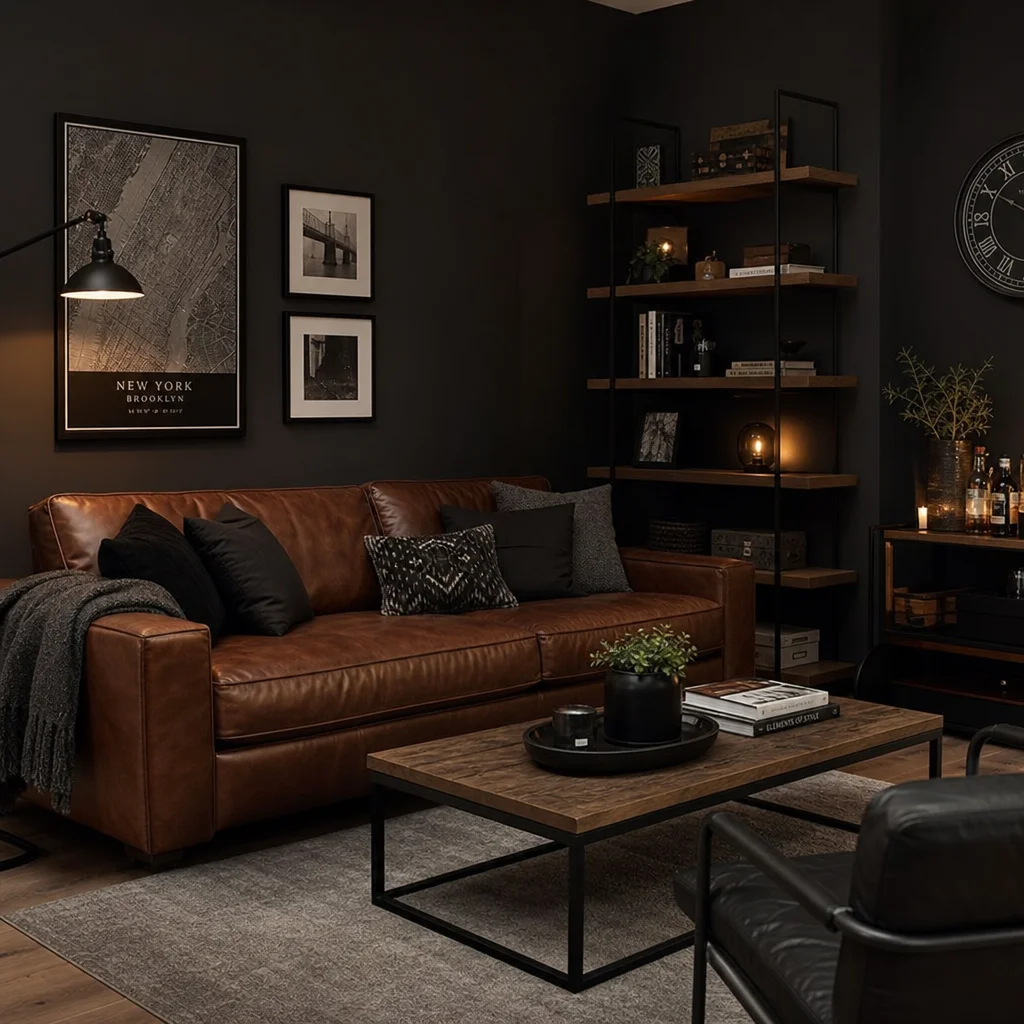
Transform your living space with sophisticated masculine room decor. Discover modern ideas for a stylish bachelor bedroom, living room, and home office.

Transform your living room into a festive haven with these creative Christmas decorated living room ideas. Discover stylish tips for any space or budget.