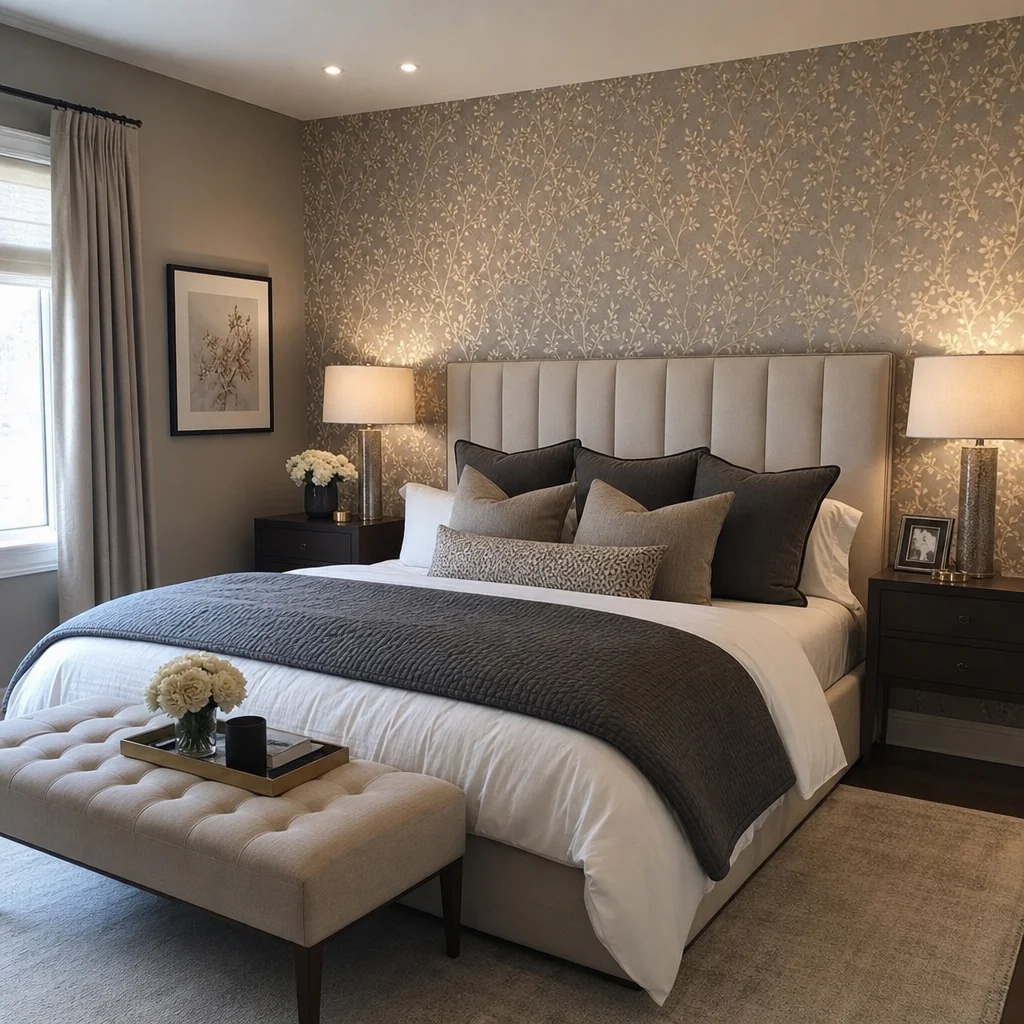
Bedroom Wallpaper Decor: Creative Ideas & Trends
Revitalize your bedroom with creative bedroom wallpaper decor ideas. Explore patterns, materials, and techniques to transform your space into a personal haven.
9 min read
Wallpaper is sold by the roll, but rooms are not shaped like rolls — pattern repeats, offcuts, and trimming mean you always need more paper than the raw wall area suggests. Running out is worse than with paint, because dye lots vary between production batches and a replacement roll may not match.
This calculator estimates how many rolls to buy from your wall dimensions, the roll format you are purchasing, and how demanding the pattern repeat is. It works for a single accent wall or a whole room.
Measure the total width of the walls you are papering (add each wall together for a full room) and the height from floor to ceiling, in feet.
Check the label: American single rolls cover about 27 square feet, while the more common European/metric rolls cover about 57 square feet. When in doubt, the roll dimensions are printed on the packaging.
A large pattern repeat means more paper is lost matching the design between strips. Choose no/small repeat, medium (up to about 12 inches), or large (over 12 inches).
Order all rolls at once from the same batch number so the color matches, and keep the leftover strip lengths for future repairs.
The calculator multiplies total wall width by height to get the area to cover, then divides by the usable coverage of your chosen roll. Usable coverage is the roll coverage reduced by a waste factor: 15% for plain or free-match papers, 20% for repeats up to about 12 inches, and 30% for large repeats — trimming, strip matching, and offcuts at the ceiling and baseboard consume that much in practice. Both are overridable: enter a custom roll size for non-standard papers and set your own waste percentage if you know your installer’s numbers.
The result is rounded up to whole rolls. We deliberately do not subtract doors and windows for wallpaper: the strips still have to run full height around them, and the offcuts are rarely reusable. If your room has an unusually large opening, such as a wide patio slider, you can trim one roll from the result at your own risk.
An American single roll covers about 27 square feet; a European or metric roll covers about 57 square feet. After trimming and pattern matching, expect to actually use 70 to 85 percent of that, which this calculator factors in automatically.
The pattern repeat is the vertical distance before a wallpaper design repeats itself. Each strip must be aligned to its neighbor, and larger repeats force you to discard more paper to make the match — up to 30 percent on repeats over 12 inches.
Generally no. Wallpaper strips run floor to ceiling, and cutting around openings creates offcuts that usually cannot be reused elsewhere. Counting the full wall gives you a realistic buffer rather than an optimistic one.
Wallpaper is printed in dye lots, and colors can shift subtly between batches. Rolls from different lots may look mismatched side by side on a wall, so always buy the full quantity at once and check the batch numbers match.
A typical 12-foot-wide accent wall with 8-foot ceilings is 96 square feet. With a medium pattern repeat that requires roughly three American single rolls or two metric rolls — enter your exact wall size above for a precise count.
Revitalize your bedroom with creative bedroom wallpaper decor ideas. Explore patterns, materials, and techniques to transform your space into a personal haven.
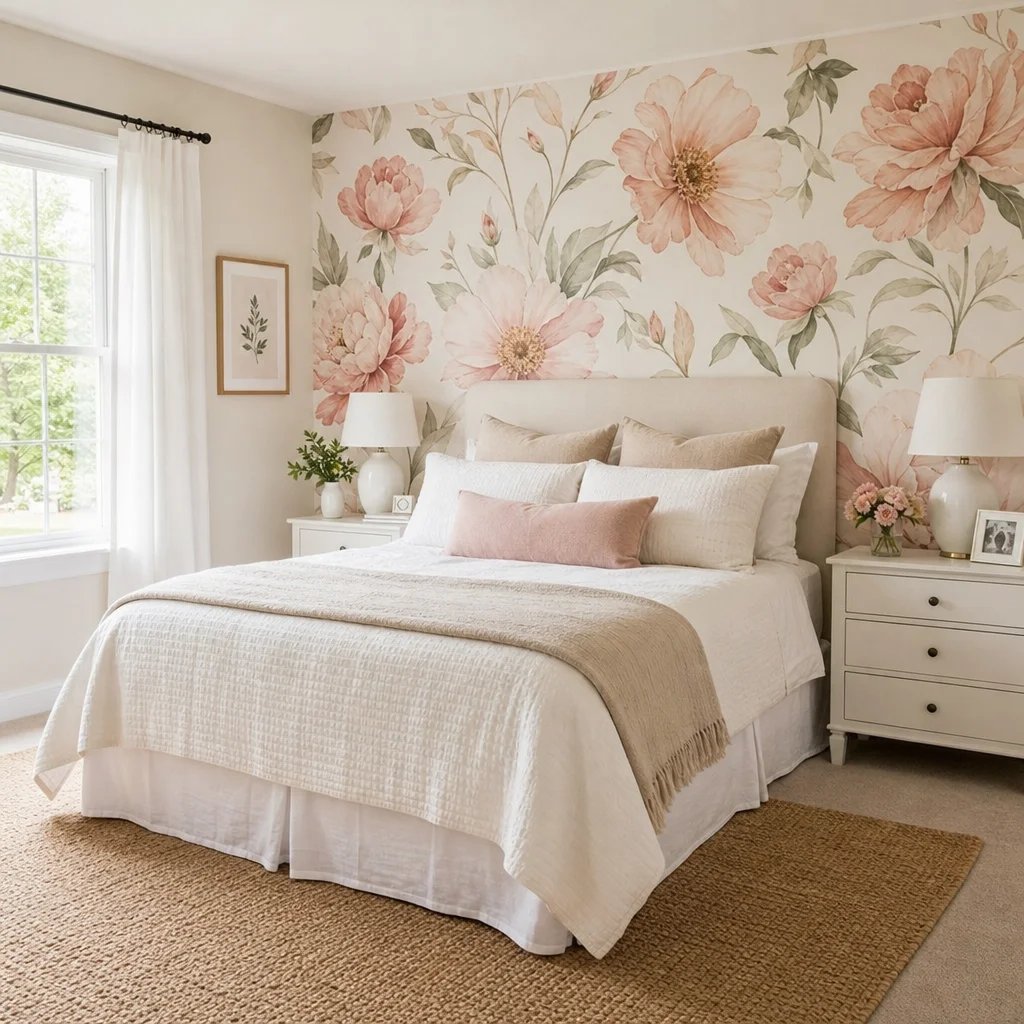
Explore charming floral bedroom decorating ideas to transform your space into a serene sanctuary, with versatile designs and color schemes.
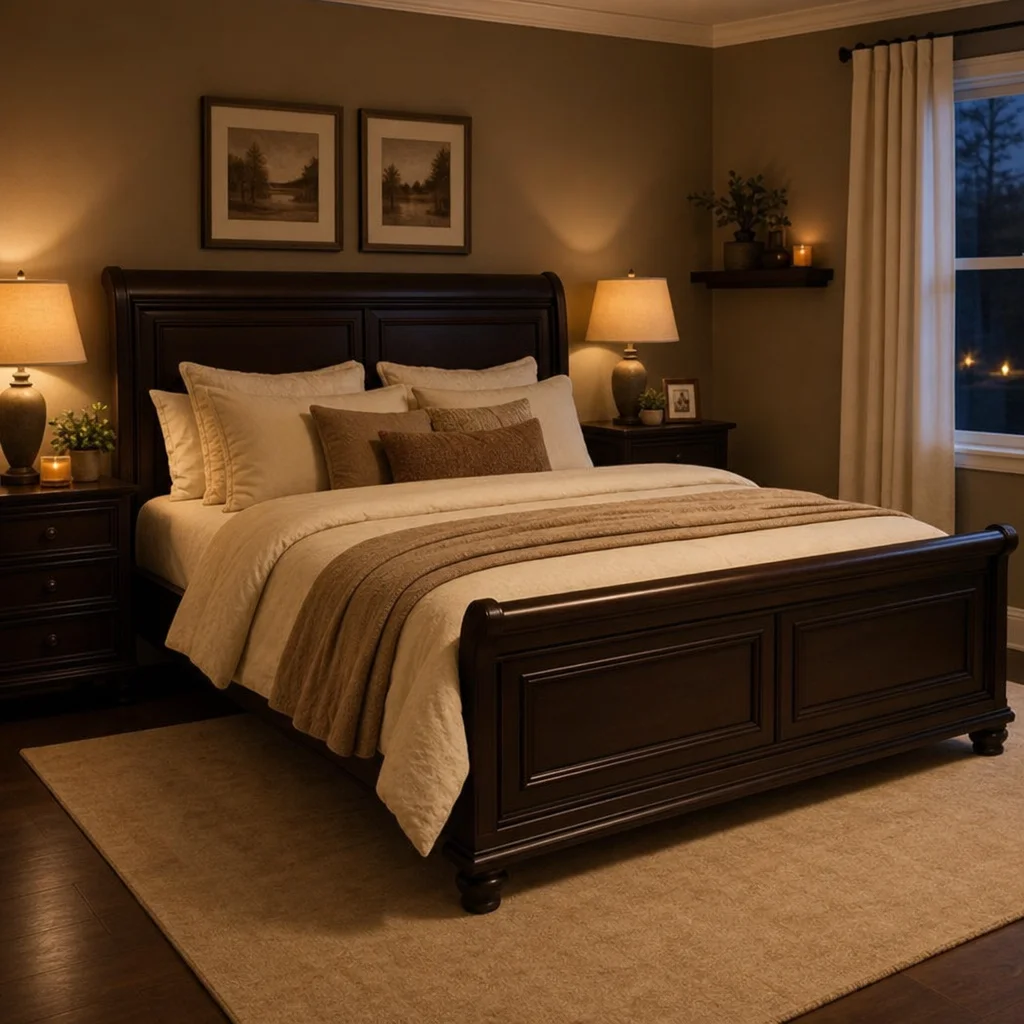
Transform your sanctuary with cozy brown and cream bedroom decorating ideas. Discover tips for neutral color schemes and cozy bedroom designs.