The dining room is more than just a place to enjoy a meal; it is a space where memories are made, stories are shared, and guests are welcomed. Exceptional dining room table decoration sets the mood for your entire home, transforming a simple piece of furniture into a captivating focal point. Whether you are preparing for a lavish holiday feast or simply looking to elevate your daily family dinners, the right styling can make all the difference.
Mastering the art of tablescaping requires a balance of aesthetics and practicality. From selecting the perfect foundation to curating a stunning centerpiece, here is your comprehensive guide to bringing your dining room table decor ideas to life.
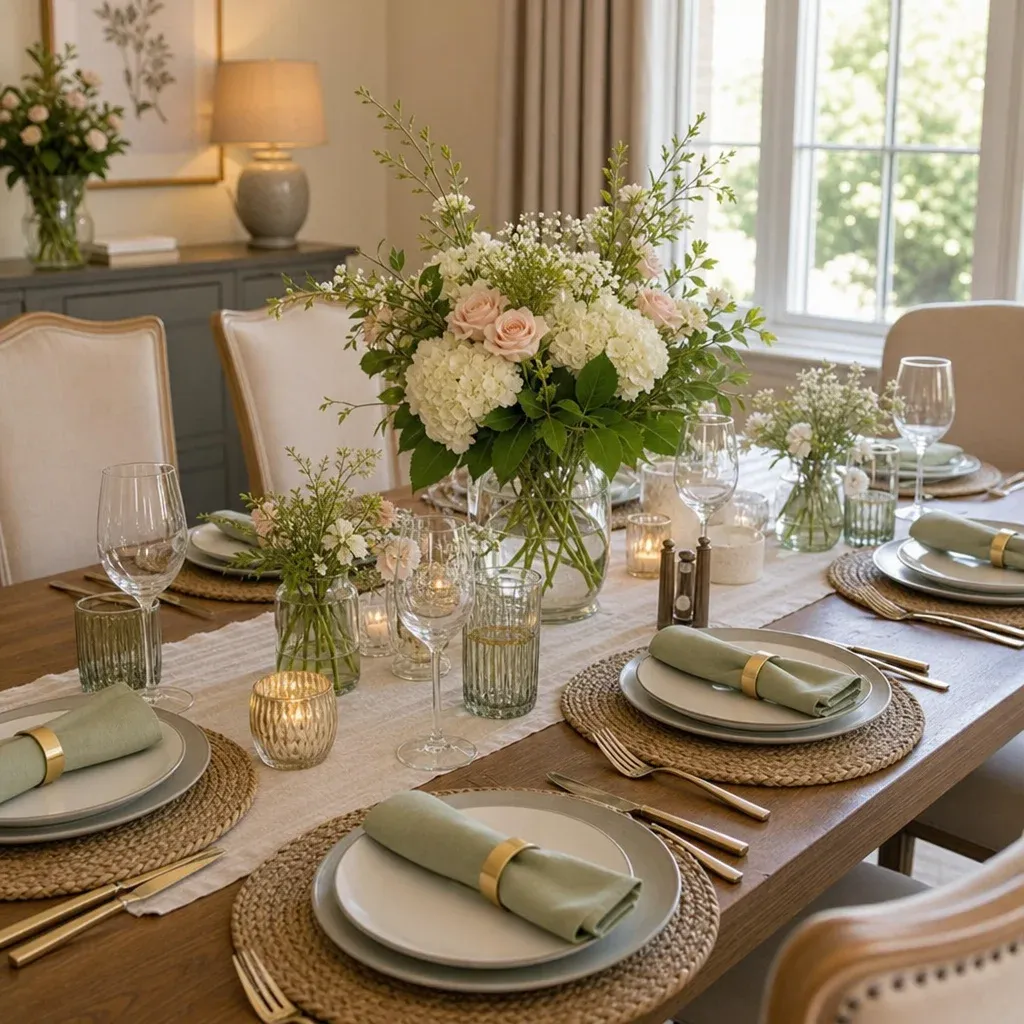
The Foundation: Linens, Runners, and Protection
Before placing a single vase or candle on the table, you must establish a strong foundation. The textiles and protective layers you choose dictate the texture, color, and longevity of your dining setup.
Mastering Table Linens
Understanding how to layer table linens is the secret to a professionally styled table. Start with a high-quality tablecloth for formal events, or leave bare wood exposed for a more rustic, everyday appeal. Next, introduce a table runner to anchor your centerpiece.
When choosing the right table runner length, the general rule of thumb is that it should hang approximately 6 to 12 inches over each end of the table. If you prefer a cleaner look that doesn’t drape, select a runner that is slightly shorter than the table itself, leaving a few inches of wood exposed at either end.
Protecting Your Furniture
Practicality is just as important as style. Protecting wood tables from heat and moisture should be a top priority, especially during large family gatherings. Use felt-backed table pads under your decorative tablecloths, or invest in stylish trivets that complement your decor.
When selecting individual place settings, consider the best materials for easy-to-clean placemats.
- Woven Vinyl: Excellent for wiping down quickly while providing a textured look.
- Faux Leather: Offers a sophisticated touch that resists liquid absorption.
- Silicone: Highly heat-resistant and perfect for homes with young children.
Defining Your Centerpiece Strategy
The centerpiece is the undisputed star of your dining room table decoration. However, designing the perfect arrangement requires careful consideration of scale, style, and social dynamics.
Scale and Proportion
A common mistake in tablescaping is choosing a centerpiece that overwhelms the space. To maintain visual balance, pay attention to the ratio of centerpiece height to table width. Ideally, your central arrangement should take up no more than one-third of the table’s total width. This leaves ample room for serving dishes, glassware, and comfortable dining.
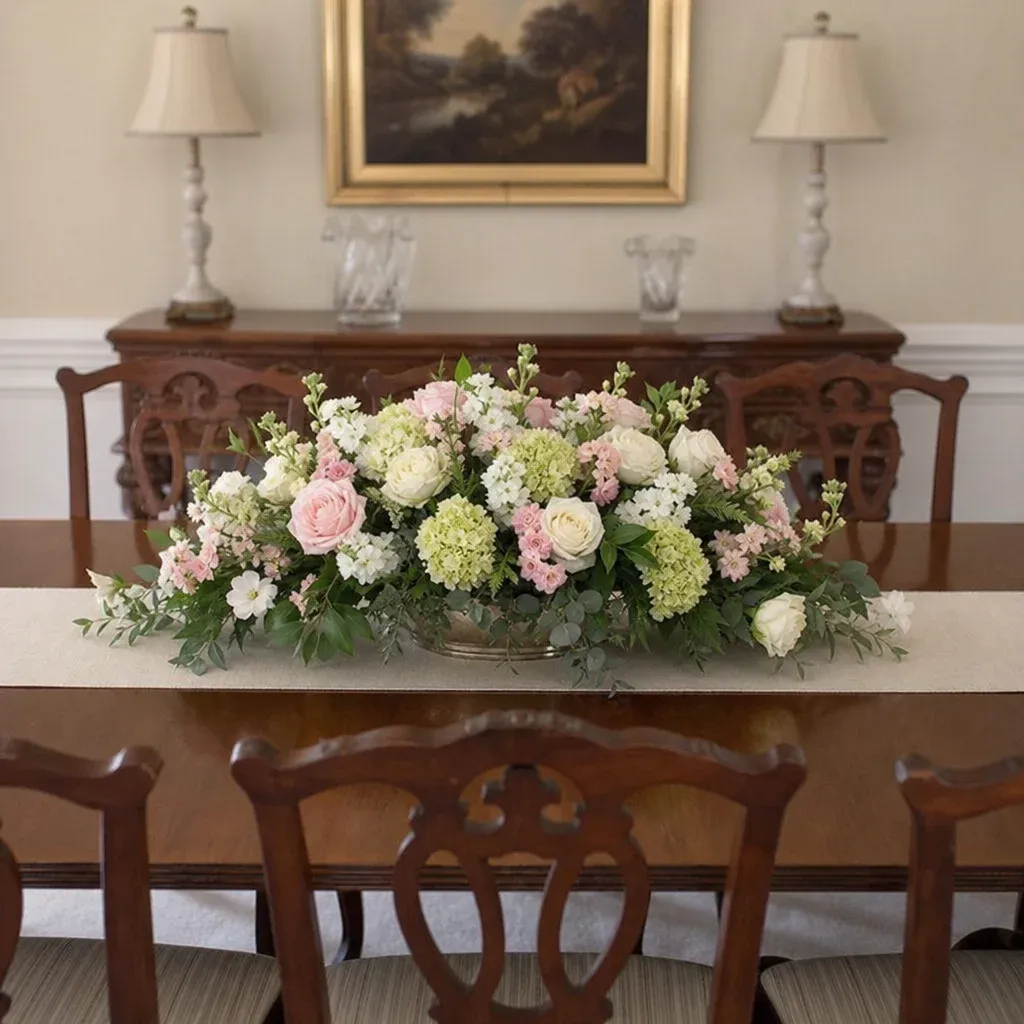
Encouraging Conversation
There is nothing more frustrating for guests than having to peer around a massive floral arrangement to speak to the person across from them. Prioritize low profile floral arrangements for conversation. Keep your centerpieces under 12 to 14 inches in height. If you want to add drama with taller elements, opt for slender taper candles that do not obstruct sightlines.
Centerpieces for Different Table Shapes
The shape of your table dictates the flow of your decor. Centerpiece ideas for rectangular tables often look best when they span the length of the furniture. Consider a “tablescape spread”—a series of three smaller floral vases, a long wooden dough bowl filled with seasonal elements, or a continuous eucalyptus garland trailing down the center.
Conversely, round tables benefit from a single, bold central focal point, such as a large ceramic bowl or a clustered trio of pillar candles on a decorative tray. It is the same triangular grouping logic that governs styling a round coffee table.
Adapting Styles: From Everyday to Extravagant
Your approach to styling will naturally shift depending on the occasion and the room itself.
Minimalist vs. Maximalist Aesthetics
When browsing dining room table decorations ideas, you will quickly encounter the debate between minimalist vs maximalist dining aesthetics.
- Minimalism: Focuses on modern dining room table decor with clean lines, neutral colors, and singular, impactful elements (like a single branch in a structural vase).
- Maximalism: Embraces bold colors, mixed patterns, layered vintage china, and lush, overflowing florals.
Choose the aesthetic that mirrors the rest of your home. In fact, establishing harmony across your living spaces is highly effective; your dining decor should subtly echo your living room center table decor to create a seamless transition between rooms.
Kitchen vs. Dining Room
It is crucial to differentiate between formal spaces and casual eating areas. When you decorate a kitchen table, functionality reigns supreme. Because this table is often used for homework, mail sorting, and quick breakfasts, keep the styling simple. A functional fruit bowl, a small resilient houseplant, or a woven tray holding salt and pepper shakers makes for ideal kitchen decor. The same practical-first approach carries onto kitchen counters.
In contrast, everyday dining room table decor can afford to be slightly more elevated. A pristine table runner, a curated stack of coffee table books, or a permanent, low-maintenance dried floral arrangement ensures the room always looks put-together without requiring daily setup.
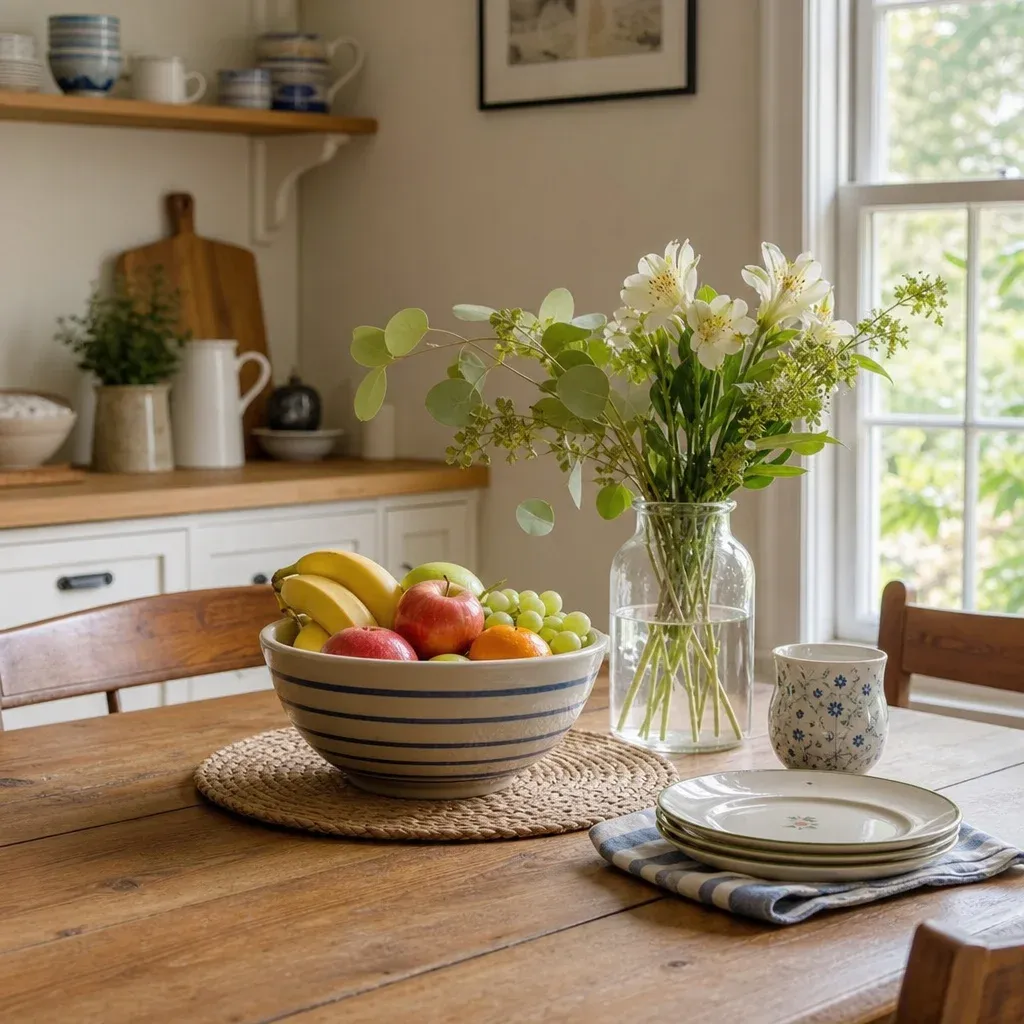
The Art of the Place Setting
A beautifully decorated table extends beyond the center. The way you arrange your guests’ seating areas adds incredible depth to the overall visual experience.
Charger Plates and Layering
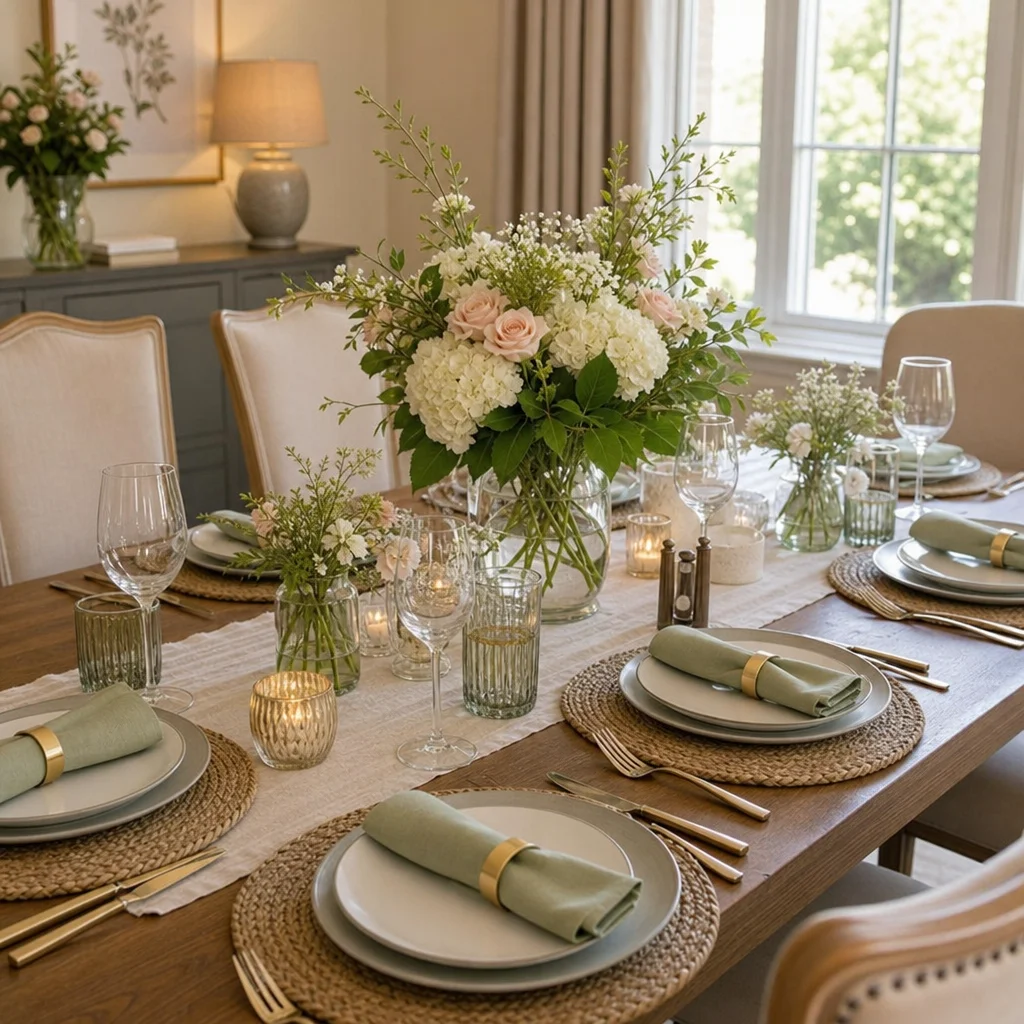
Charger plates are large, decorative base plates that add an instant touch of elegance to any meal. The standard dimensions for charger plates are typically 13 to 14 inches in diameter. They serve as a frame for your dinnerware, catching spills and retaining heat. Layer your dinner plate, salad plate, and a beautifully folded linen napkin on top of the charger for a dimensional, magazine-worthy look.
Etiquette and Layout
Understanding formal vs informal place setting etiquette elevates you from a good host to a great one.
- Informal Setting: Requires only the essentials. A dinner plate, a fork on the left, a knife and spoon on the right, and a single water glass above the knife.
- Formal Setting: Introduces multiple forks (salad and dinner) on the left, multiple knives and a soup spoon on the right, a bread plate at the top left, and varied glassware for water, white wine, and red wine on the top right.
Even if the food is casual, a meticulously arranged formal setting can make a simple dinner party feel like a royal banquet.
Thematic Inspiration and Color Harmony
To create a truly immersive dining experience, your table must tell a cohesive visual story.
Crafting a Color Palette
Creating a cohesive color palette for hosting is step one. Look to the existing colors in your dining room—the wall paint, the rug, the curtains—and pull one or two accent colors for your tablescape. A foolproof method is to use a neutral base (white linens, clear glass) and introduce pops of color through napkins, flowers, and colored glassware.
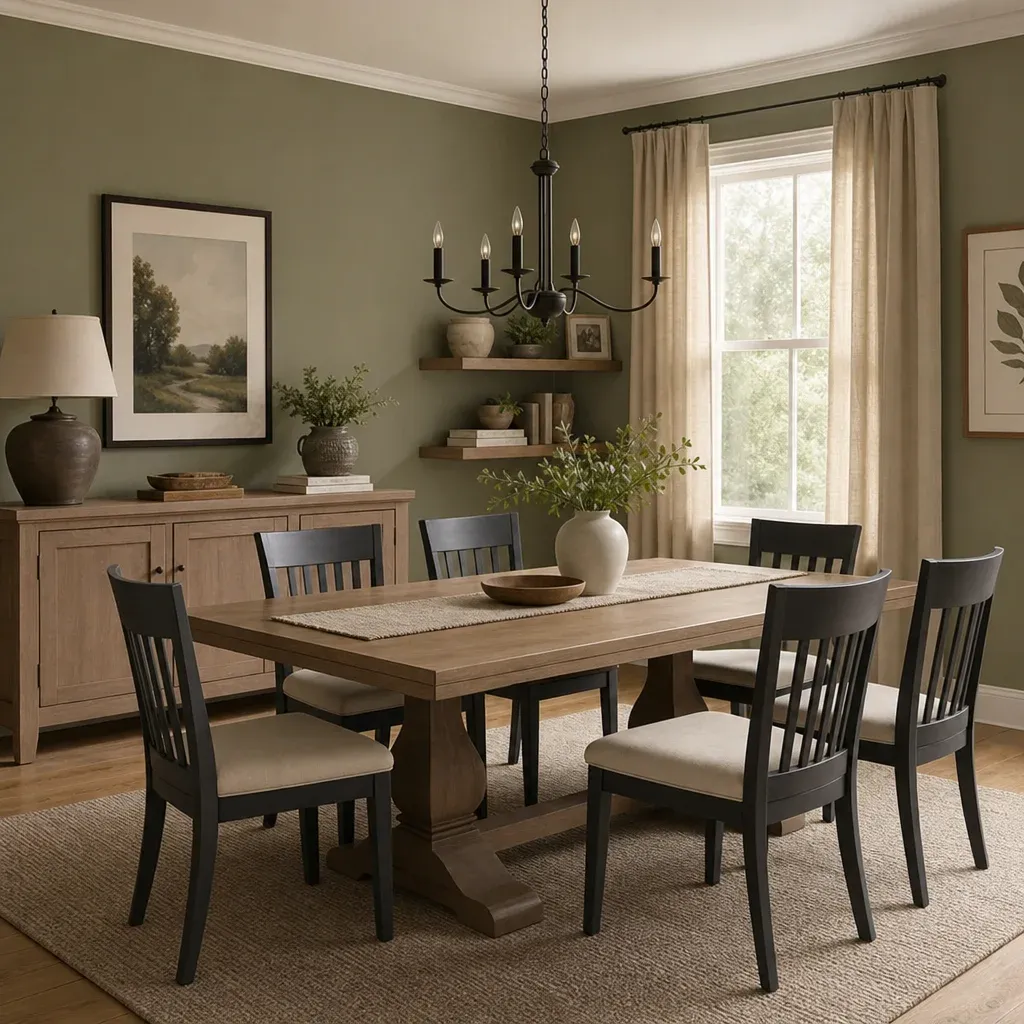
Natural Elements and Farmhouse Charm
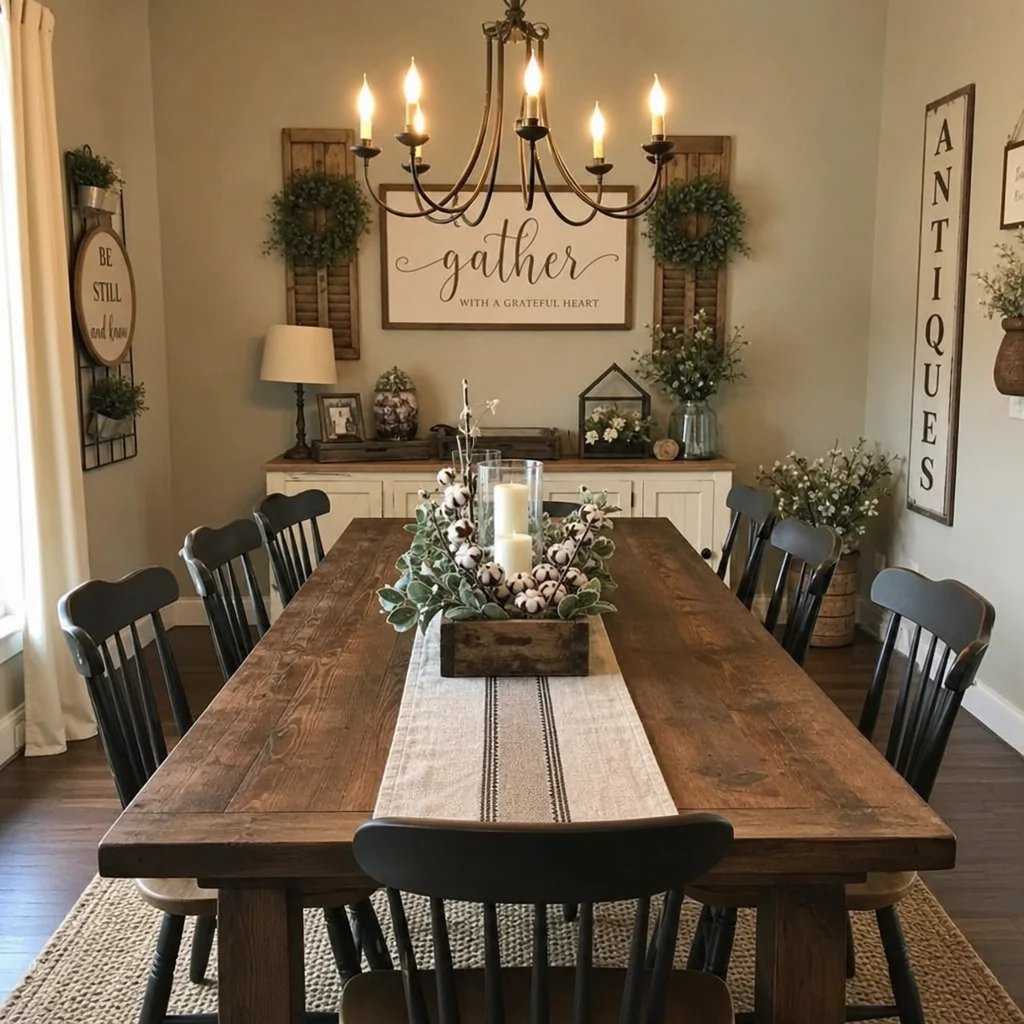
If you are seeking modern farmhouse tablescape inspiration, the secret lies in organic textures. Think exposed grain wood, matte ceramics, frayed linen napkins, and muted, earthy tones. Incorporating natural elements into table displays adds immediate warmth and texture. Scatter pinecones in the winter, use hollowed-out citrus fruits as votive holders in the summer, or arrange a centerpiece of vibrant gourds in the autumn.
Room-Wide Coordination
Your dining table does not exist in a vacuum. If your dining space features a fireplace, seasonal mantel and tabletop coordination is a brilliant way to unify the room. If you drape a pine garland across your mantel for the holidays, weave a similar pine garland down the center of your table. If you use brass candlesticks on the table, mirror them on the mantelpiece. Both Christmas dining table centerpieces and dining room wall decor show how to carry a scheme across the whole room.
Safety and Finishing Touches
The final elements of dining room table decoration are lighting and ambiance. Candles are arguably the most effective way to create a warm, inviting atmosphere, but they must be handled with care.
Always practice proper candle safety tips for centerpiece displays. Ensure that open flames are kept at least several inches away from dry florals, pampas grass, or trailing linens — decorations catching fire is a leading cause of home candle fires, as the NFPA’s holiday safety guidance documents. Never leave a lit candle unattended, and consider flameless LED tapers when children or pets are around. If your centerpiece is highly flammable, enclose your candles in tall glass hurricane vases. Additionally, avoid heavily scented candles on a dining table, as artificial floral or bakery scents can clash with the aroma of the food and ruin the culinary experience.
Conclusion
Elevating your dining room from a simple eating space to a stunning gathering place is all about thoughtful layering, appropriate scaling, and personal style. Whether you are leaning into minimalist modern dining room table decor or embracing lush, seasonal displays, the key is to create a space that feels inviting. By mastering the balance of beautiful centerpieces, protective linens, and cohesive color palettes, your table will always be ready to welcome guests in style. Experiment with these elements, adapt them to your unique space, and watch as your dining room transforms into the true heart of your home.