Having a vast, open living space is a dream for many homeowners, but once you finally have the keys, a stark reality often sets in: how to decorate a large living room without it feeling like an empty hotel lobby?
When faced with massive square footage, soaring ceilings, and endless blank walls, it is easy to feel overwhelmed. Fortunately, the secret to a beautifully balanced space lies in scale, intentional zoning, and strategic layering. If you are searching for fresh living room inspiration and practical living room ideas, you are in the right place.
Below, we will walk you through exactly how to decorate a large living room so that it feels inviting, functional, and undeniably stylish.
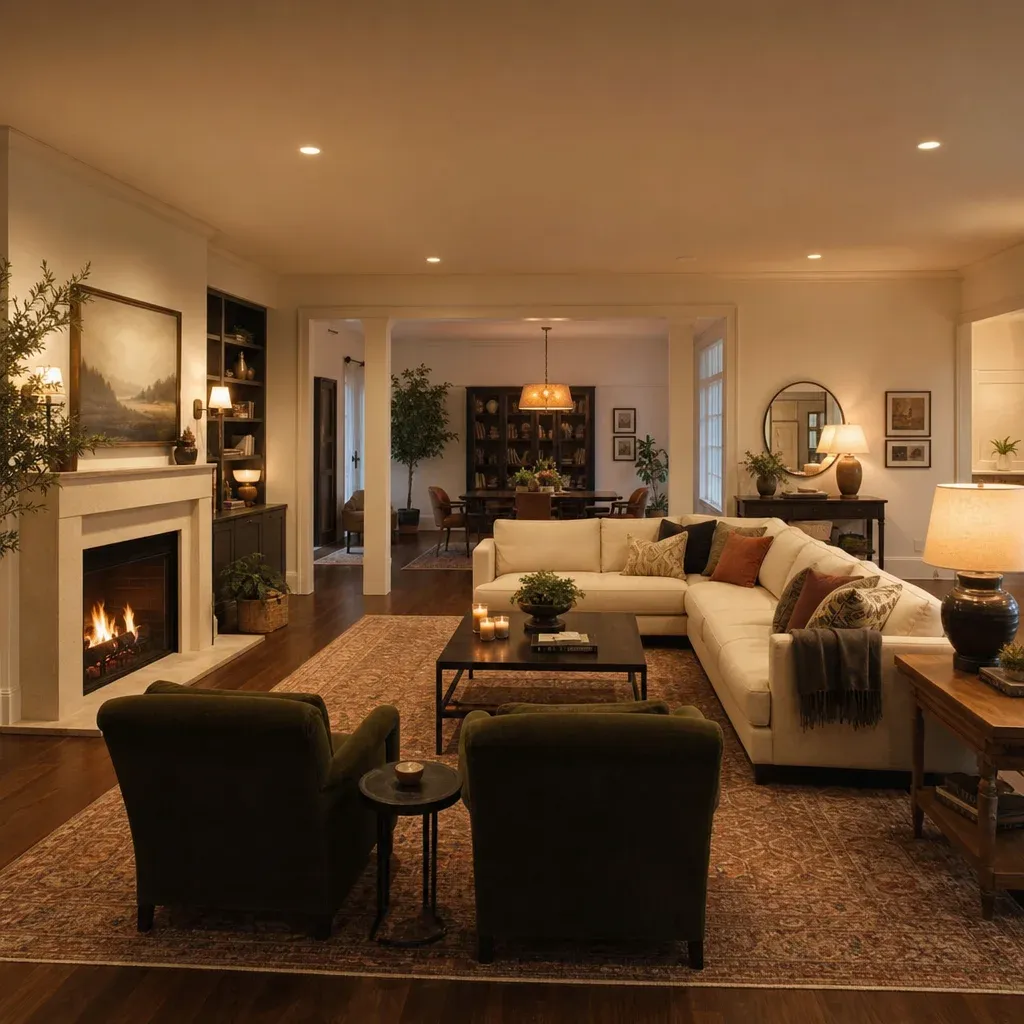
The Blueprint: Zoning and Planning Your Space
Before you buy a single piece of furniture or select a paint color, you need a plan. Walking into a massive, empty room can leave you paralyzed by choices. The most effective approach is step by step spatial planning for oversized interiors.
Divide and Conquer: Zoning
The biggest mistake you can make in a spacious room is treating it as a single, uniform area. Instead, you need to learn how to zone a big living area. Think about how you actually want to use the room. Do you need a primary spot for watching TV? A quiet corner for reading? A spot for a piano or a game table?
By creating multiple conversation areas in one room, you instantly break up the cavernous feel. Here is how to map it out:
- The Primary Zone: This is usually the largest area, anchored by a fireplace or television. Focus your main seating arrangement here.
- The Secondary Zone: Think of a pair of comfortable swivel chairs by the window with a small side table, perfect for morning coffee.
- The Transitional Zone: Use consoles, benches, or even a writing desk behind a sofa to transition between your primary living space and an adjoining dining area.
Mastering Furniture Layouts and Scale
Once your zones are established, it is time to bring in the furniture. In a grand space, standard-sized furniture will look miniature. You must scale up.
Float Your Furniture
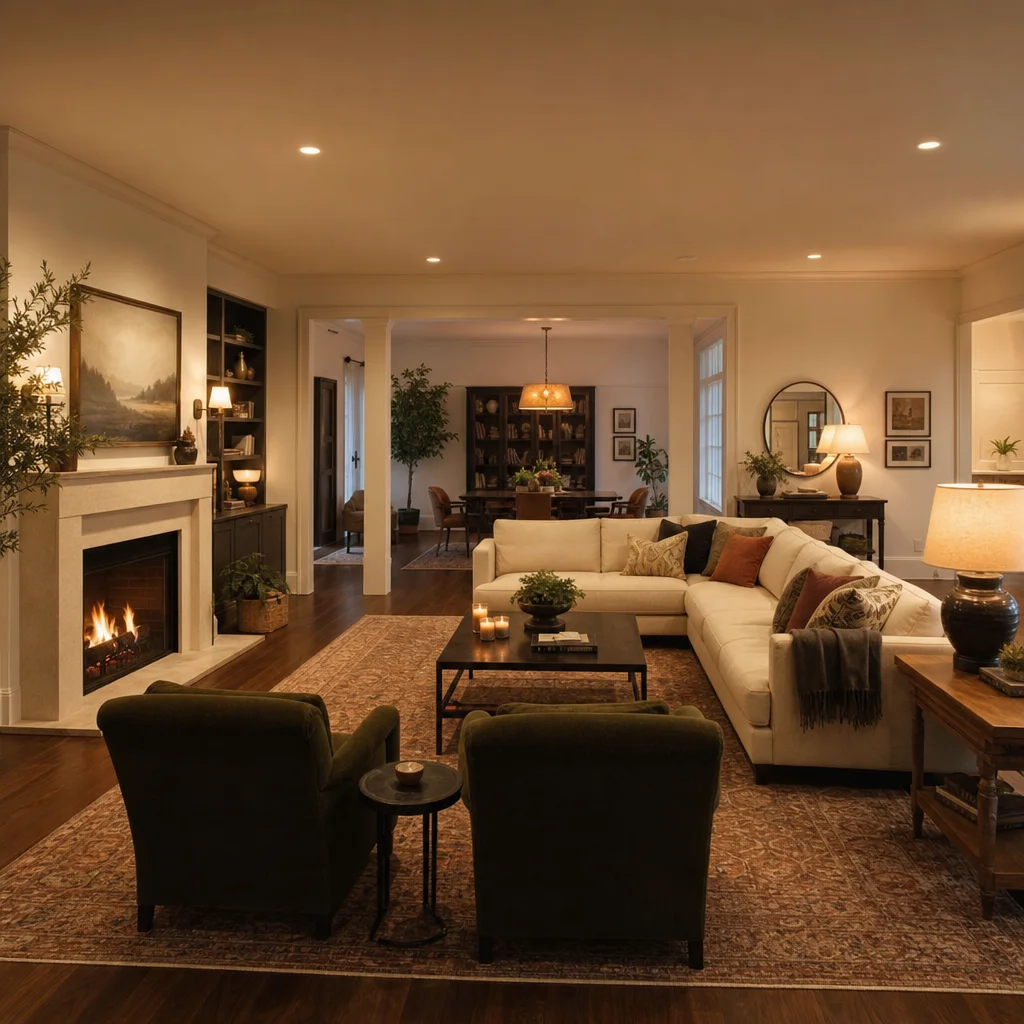
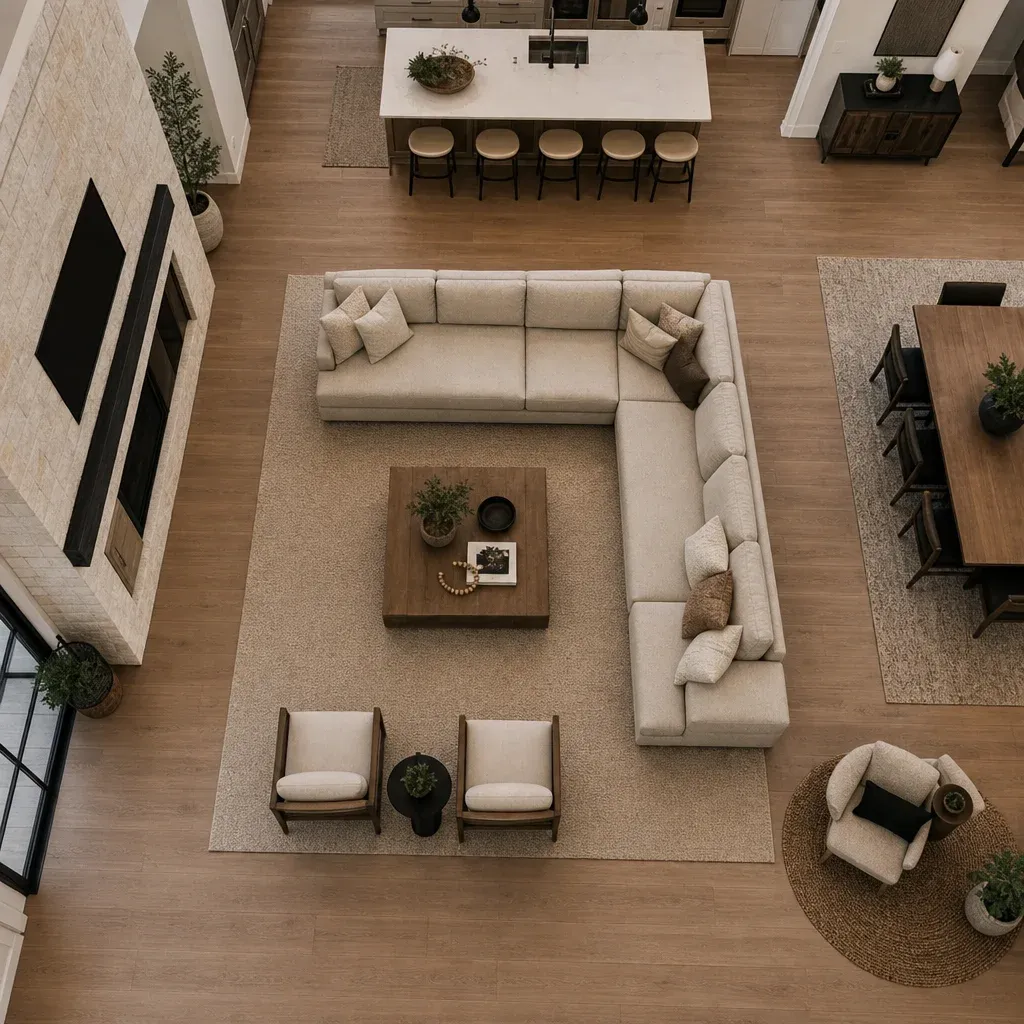
Resist the urge to push all your furniture against the walls. A floating furniture layout for open spaces is absolutely essential. By pulling your sofas and chairs toward the center of the room, you create intimate seating arrangements and natural walkways around the perimeter.
Sectionals and Shapes
If you are looking for oversized sectional sofa placement ideas, consider placing a massive U-shaped or L-shaped sectional right in the middle of your primary zone. This acts as a room divider, clearly defining where the living space begins and ends.
But what if your footprint is awkward?
- How to decorate a rectangular living room: Divide the rectangle into two squares. Use one square for your main seating and the other for a secondary function, like a small home office or a reading library.
- How to decorate a long narrow living room: Avoid lining furniture down one side like a bowling alley. Instead, break the length by placing a sofa horizontally across the room, essentially cutting the long narrow space into distinct, usable sections.
Anchoring the Space with Rugs and Color
With your layout decided, you need to anchor your floating furniture. The best way to do this is from the ground up, moving on to the walls.
Rug Rules for Open Concepts
Choosing rug sizes for open floor plans can be tricky. A rug that is too small will make your furniture look like it is floating aimlessly on a vast ocean of hardwood. As a general rule, go bigger than you think — and if you want a specific number rather than a guess, run your dimensions through a rug size calculator before you order. At the very least, the front legs of all your seating pieces should rest on the rug. If the room is exceptionally large, opt for a massive custom-cut broadloom or layer a smaller vintage rug over a giant natural jute rug to define your primary zone perfectly.
Choosing Your Palette
Your paint choice plays a massive role in making a cavernous room feel cozy. When considering dark vs light paint for grand living areas, think about the atmosphere you want to evoke.
- Light Paint: Crisp whites, soft creams, and pale greys will highlight your architecture and bounce light around, keeping the room airy and expansive.
- Dark Paint: Deep navy, rich forest green, or charcoal grey will visually bring the walls closer together, creating an intimate, moody vibe. If you are terrified of an overly massive space, dark paint is an excellent trick to instantly warm up the room.
Tackling the Vertical Space and Walls
Perhaps the most intimidating aspect of a massive living area is the sheer amount of blank drywall. If you are struggling with how to decorate a large wall in living room areas, you are not alone.
Art and Galleries
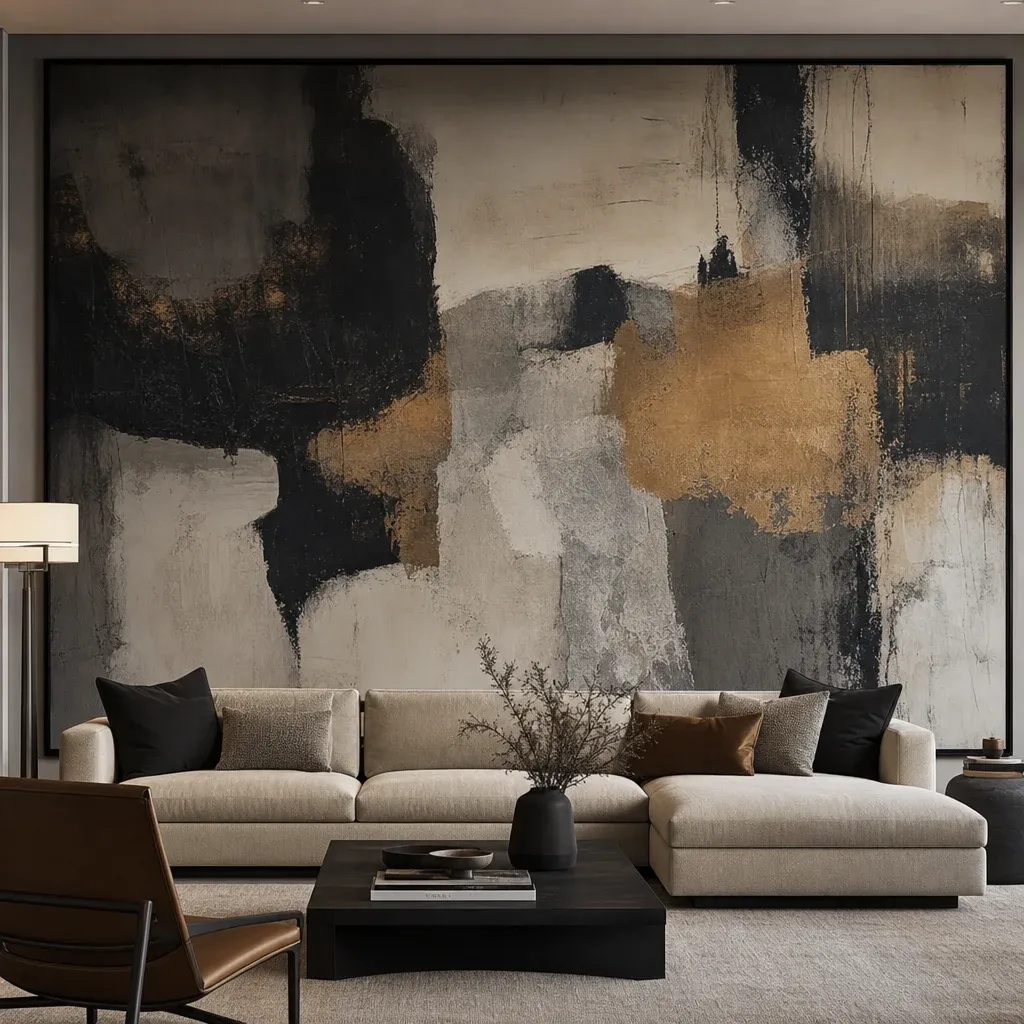
When considering how to decorate a large living room wall, you generally have two main choices: a gallery wall vs large scale statement art.
- Large Scale Statement Art: A single, massive canvas (or a triptych of three large panels) brings a sense of sophisticated minimalism. It anchors the wall without looking cluttered.
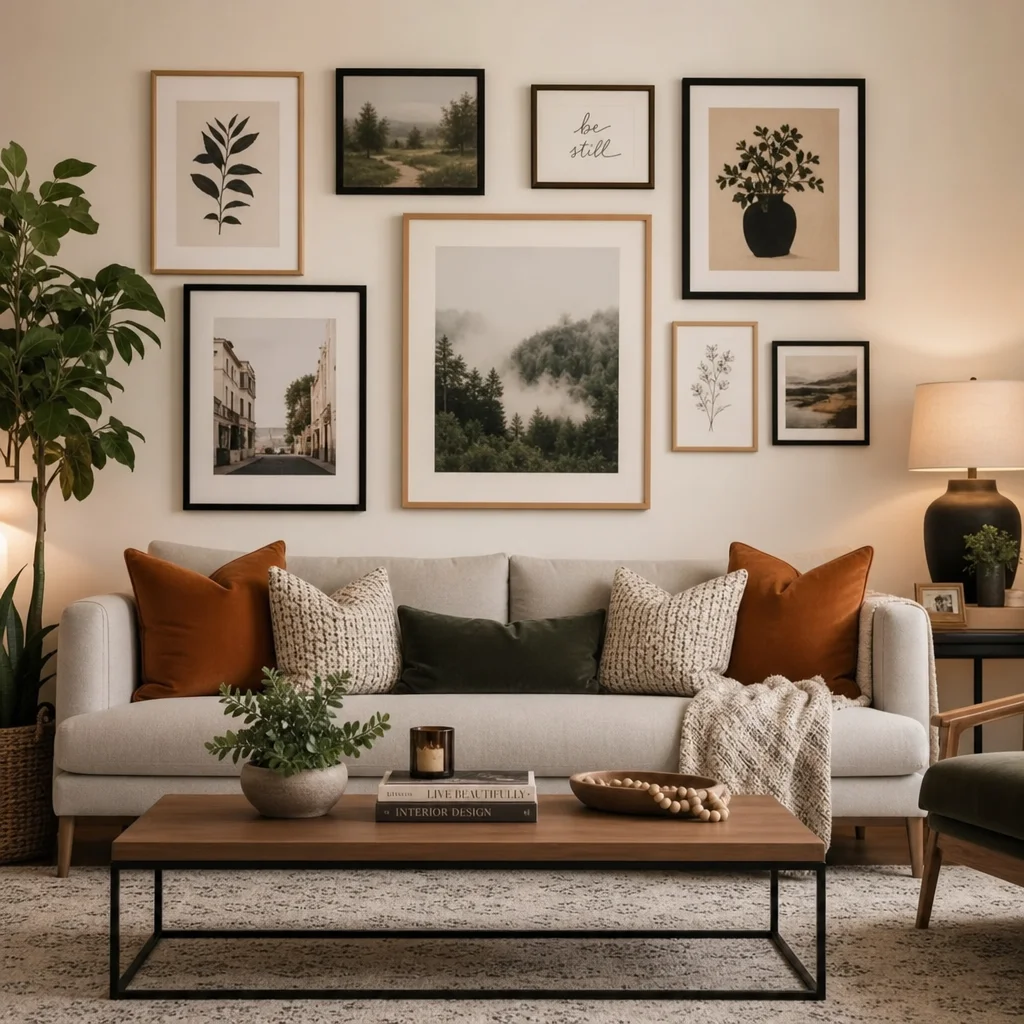
- Gallery Wall: If you prefer a more eclectic, personal, and collected look, a gallery wall stretching from the sofa to the ceiling can fill the void beautifully. Ensure you mix frame sizes and include a few larger pieces so the arrangement does not look like a collection of postage stamps on a giant canvas.
Both approaches come down to execution, and hanging height is where most people slip. Both hang by the same rules: the 57-inch centre line and the right anchors, covered in more depth in hanging living room wall art.
Reaching the Ceiling
If your home features soaring architecture, you will need double height ceiling decorating tips. Do not just decorate the bottom eight feet of the room and leave the top half completely bare.
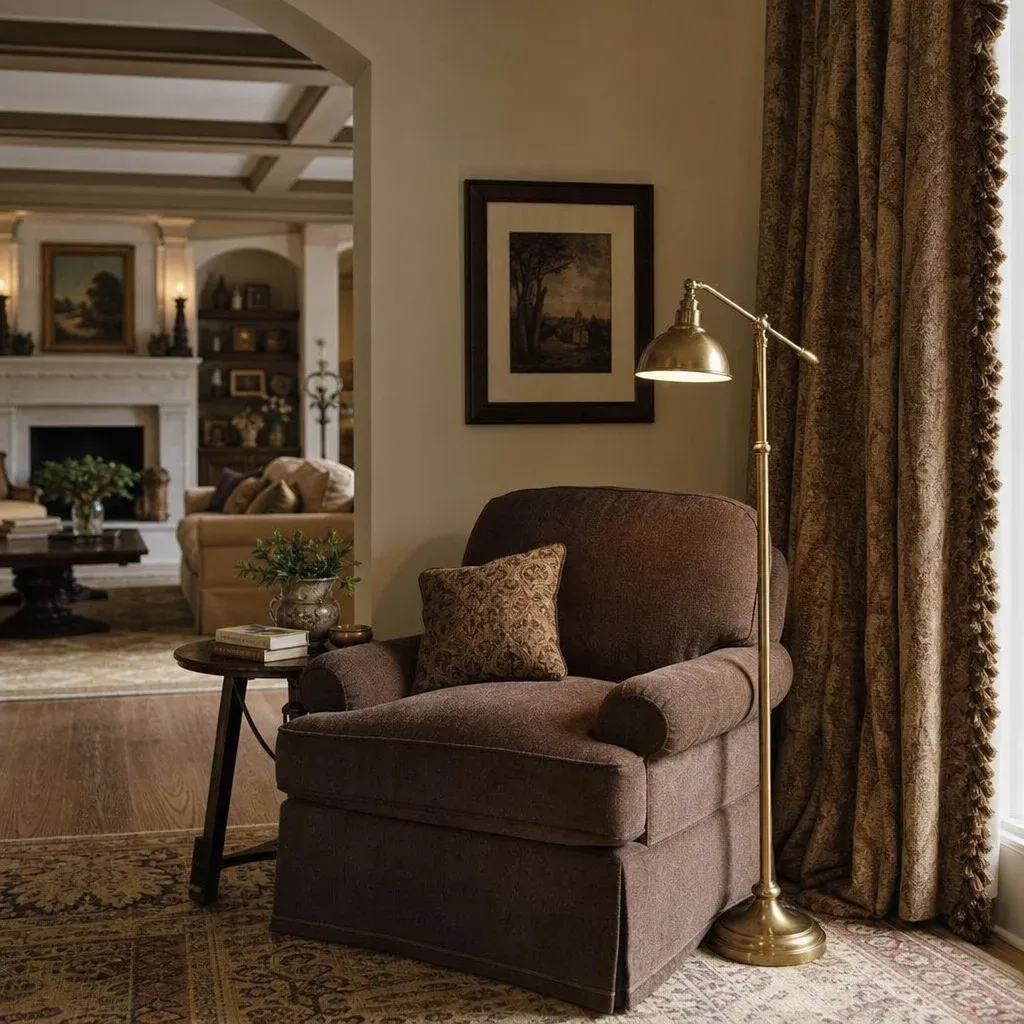
- Window Treatments: Invest in floor to ceiling window treatment styles. Hanging heavy, custom drapery from just below the ceiling line all the way to the floor draws the eye upward, celebrating the height of the room while adding vital texture and warmth. Getting the drop right matters more than the fabric does, and a curtain size calculator works out the panel width and length for your window.
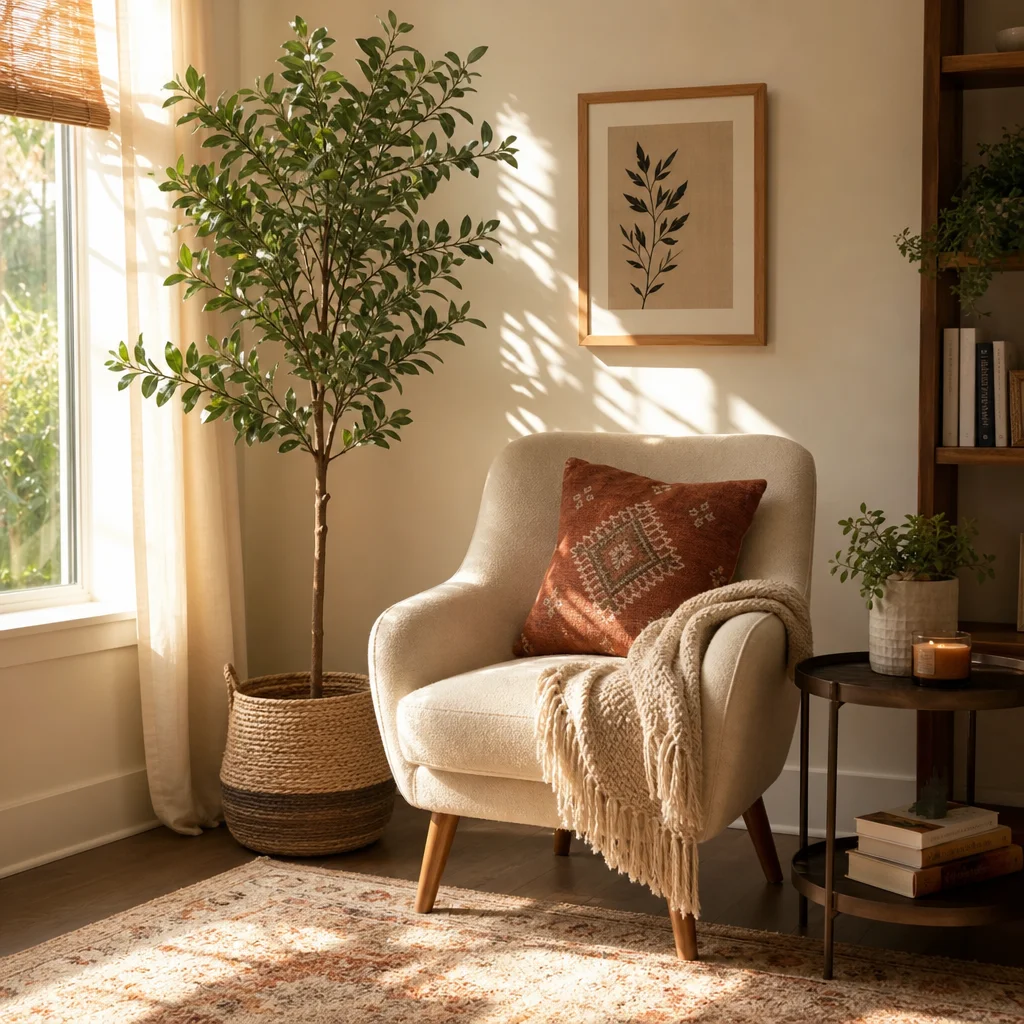
- Bring the Outdoors In: Another fantastic trick is using indoor trees to fill vertical space. A towering Fiddle Leaf Fig, an elegant Olive tree, or a dramatic Bird of Paradise can effortlessly bridge the gap between your human-scaled furniture and your towering ceilings.
The Finishing Touches: Corners, Lighting, and Acoustics
The final step in our guide to grand living rooms involves the subtle details that elevate a space from “decorated” to “professionally designed.”
Don’t Ignore the Corners
A common dilemma is what to do with empty corners in large rooms. Leaving them bare makes the room feel unfinished. We have a whole guide devoted to decorating living room corners, but here are the fastest wins:
- A standalone reading nook with a plush chaise lounge, a floor lamp, and a small bookshelf.
- A stylish bar cart paired with a piece of bold art.
- A large, sculptural pedestal featuring a trailing plant or an interesting artifact.
Layering Your Light
A single chandelier in the center of the ceiling will leave the edges of your room in dark, unwelcoming shadows. You must employ layered lighting strategies for expansive interiors.
Large rooms need considerably more total output than people expect; a lighting calculator converts your square footage into a target lumen count. Shop by lumens rather than watts, too — the Department of Energy’s consumer lighting guide explains why wattage no longer tells you how bright a bulb actually is now that LEDs have replaced incandescents.
- Ambient Lighting: Start with your overhead chandeliers or recessed lighting.
- Task Lighting: Add reading lamps next to armchairs and table lamps on console tables.
- Accent Lighting: Use picture lights over your large-scale art, or tuck small uplights behind your indoor trees to cast dramatic shadows on your high ceilings. By creating pools of light at various heights, you bring the room to life after the sun goes down.
Softening the Sound
Finally, massive rooms are notorious for terrible echoes. Learning how to improve large room acoustics with decor is crucial for comfort. Hardwood floors, tall ceilings, and bare walls bounce sound around aggressively.
Hard, parallel surfaces are the culprit: sound reflects between them instead of being absorbed. To fix it, you need to introduce textiles. The oversized rugs and floor-to-ceiling drapery we mentioned earlier will do wonders. Additionally, you can incorporate soft, upholstered ottomans instead of hard wooden coffee tables, layer throw blankets and plush pillows on your oversized sectional, and even hang acoustic panels wrapped in decorative fabric disguised as canvas art.
Final Thoughts on Styling Spacious Rooms
Learning how to decorate a large living room doesn’t have to be a stressful endeavor. By focusing on intentional zoning, scaling up your furniture, addressing the vertical height, and layering in warmth through lighting and textiles, you can transform even the most cavernous space into an inviting retreat.
Remember, it is a marathon, not a sprint. Take your time measuring, use painter’s tape to map out your floating layouts, and let your expansive living room evolve into a space that is as functional as it is breathtaking.