Walking into a living room with bare walls can feel like stepping into an unfinished story. Your walls are the largest canvas in your home, offering a massive opportunity to showcase your personality, elevate your interior design, and create a cozy atmosphere. However, figuring out exactly how to decorate a living room wall hangings can feel like a daunting task. Where do you start? How high should pieces go? What if you have a massive empty space or a tiny apartment?
Whether you are looking to create a cozy, eclectic vibe or a sleek, modern aesthetic, understanding a few foundational design rules can transform your space. Let’s dive into the ultimate guide to mastering your living room walls, from selecting the right pieces to hanging them like a seasoned interior designer.
Establishing the Basics: Placement and Height
Before you buy a single piece of art, it is crucial to understand the mechanics of hanging decor. The most common mistake homeowners make is hanging their art entirely too high, forcing guests to crane their necks to appreciate it.
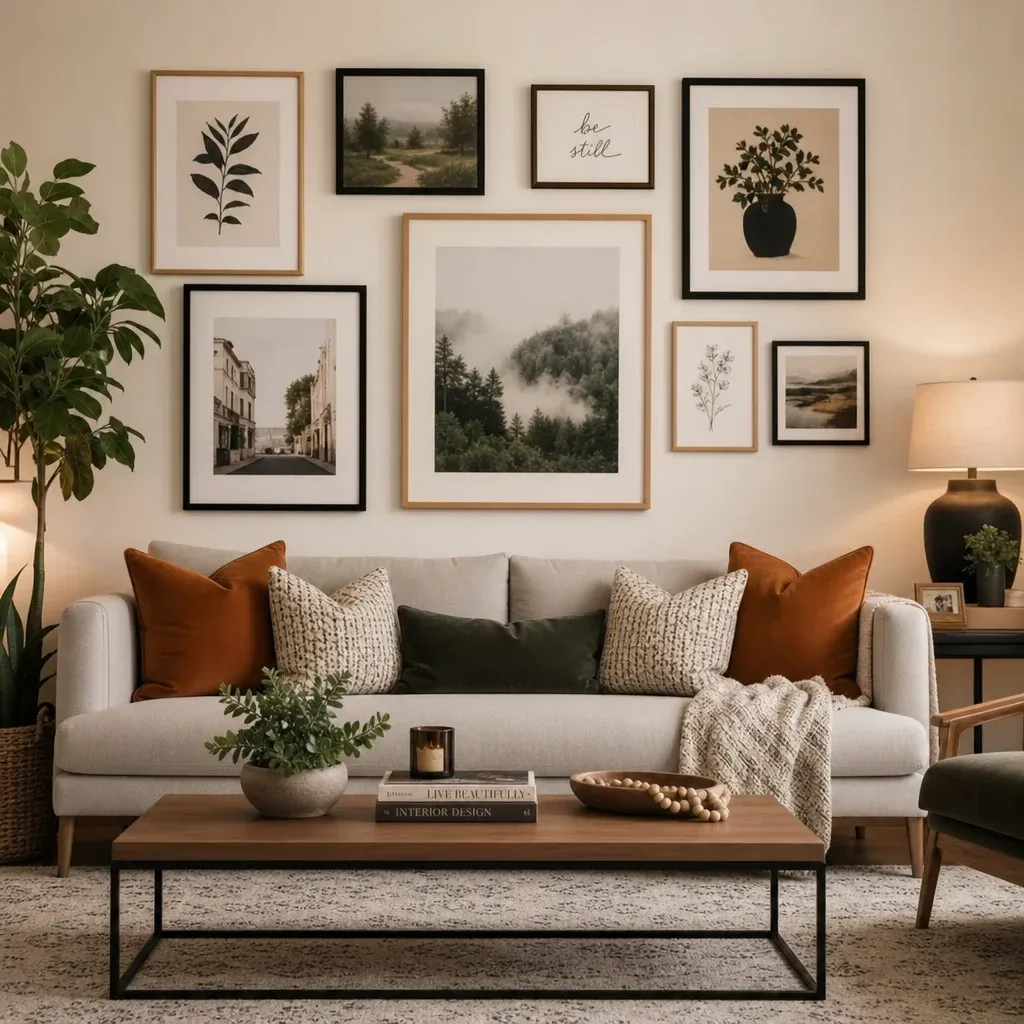
If you are wondering how high to hang art in living room spaces, museum curators have already solved this problem for you. The golden standard in the design world relies on standard picture hanging height guidelines, which dictate that the center of your artwork should sit at eye level.
But what if you are exceptionally tall or short? That is where the famous rule of thumb comes into play. If you have ever asked, “what is the 57 inch rule for art?”, here is the secret: you should hang your pictures so that the exact center of the artwork (or the center of a gallery wall grouping) is exactly 57 inches from the floor. This measurement represents the average human eye level and instantly creates a harmonious, grounded feeling in the room.
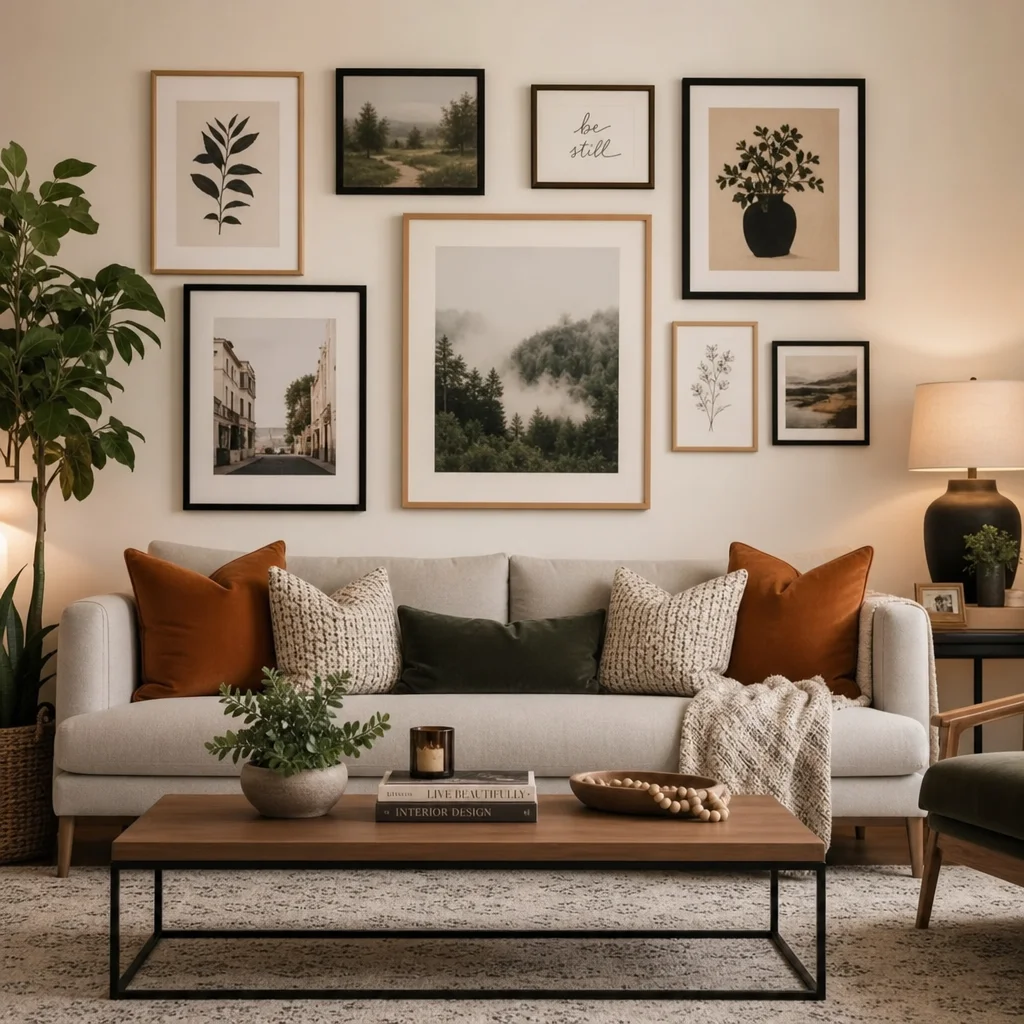
When applying focal point wall design principles, you also need to consider your furniture. Art should relate to the furniture below it, not float aimlessly near the ceiling. If you are hanging a piece directly above a sofa or console table, the bottom edge of the frame should sit about 4 to 8 inches above the top of the furniture.
Conquering the Blank Canvas: Decorating Large Spaces
Decorating a big wall in living room layouts can be intimidating. When you have soaring ceilings or a long, uninterrupted stretch of drywall, tiny frames will get swallowed up and look entirely out of place. If the whole room is oversized rather than just the one wall, zoning and furniture scale should come first.
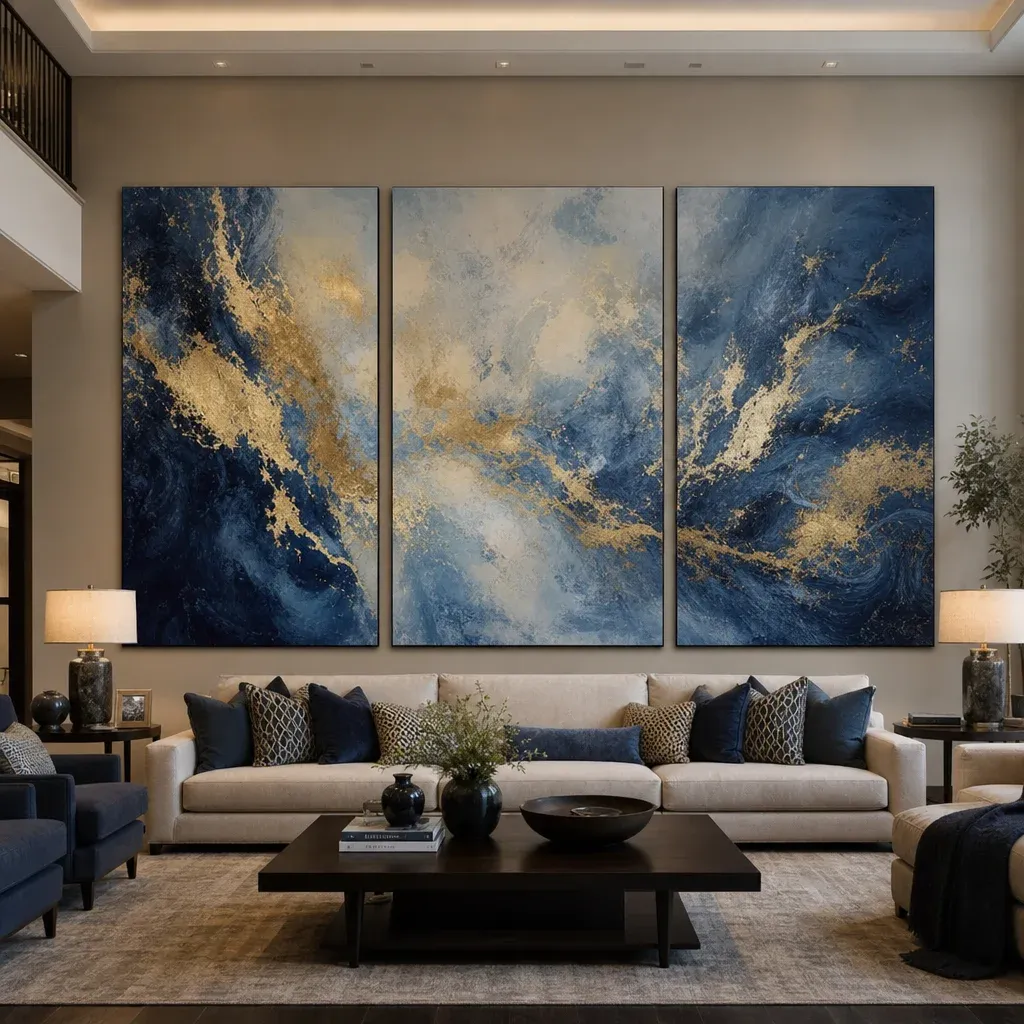
If you are struggling with filling empty wall space behind sofa arrangements, you need to think in terms of scale and proportion. Here are some highly effective large wall decorating ideas for living room spaces:
- Triptychs and Multi-Panel Art: Instead of trying to find one impossibly large canvas, look for a single image split across three or more large panels. This provides massive coverage while remaining easy to transport and hang.
- Architectural Mirrors: A massive, floor-to-ceiling mirror leaning against the wall not only fills space but reflects light, making the room look double its size.
- Oversized Murals and Wallpaper: Modern large wall decor ideas for living room walls often skip the frames entirely. A peel-and-stick panoramic mural can act as one giant piece of art. Before you order, a wallpaper calculator works out how many rolls the wall needs once pattern repeat is accounted for. There is more on choosing a print that will not overwhelm a room if the scale worries you.
Curating Your Collection: Art, Frames, and Photography
For a more personalized touch, nothing beats a well-curated collection of art. However, throwing random photos on a wall can easily look cluttered. Establishing a cohesive color palette for wall displays is the key to making disparate pieces look like a deliberate, high-end collection. Choose two or three dominant colors that pull from your room’s rug, pillows, or curtains, and ensure every piece of art features those tones.
When selecting decorative pictures for living room walls, you will eventually face the debate of canvas prints vs framed art.
- Canvas Prints: These offer a clean, modern, and slightly more casual look. They lack the glare of glass, making them perfect for brightly lit rooms, and they carry a lightweight visual appeal.
- Framed Art: Frames add polish, structure, and tradition. A thick, ornate frame can make a small piece feel more substantial, while sleek, thin metal frames lean into a contemporary aesthetic.
If you have a collection of both, combining them is a great way to build an eclectic look. To pull this off, you’ll need some creative gallery wall layout ideas. Instead of eyeballing it, trace your frames onto kraft paper, cut them out, and tape them to the wall. This allows you to test out grid layouts (perfectly aligned rows and columns for a modern look) or salon-style layouts (an organic, clustered arrangement that builds outward from a central focal point) without putting unnecessary holes in your drywall.
Adding Depth and Texture: 3D and Textile Art
If your living room feels a bit flat, it might be because everything on your walls is two-dimensional. Introducing 3d living room wall decor instantly adds depth, shadows, and intrigue to your space.
One of the most popular ways to achieve this is through living room metal wall decor. Metal brings a sleek, slightly industrial edge that contrasts beautifully with soft upholstery. If your style leans contemporary, look into minimalist metal wall sculpture designs. Think geometric wireframes, brass sunbursts, or abstract oxidized iron plates. These pieces catch the light as the sun moves through the room, creating an ever-changing display.
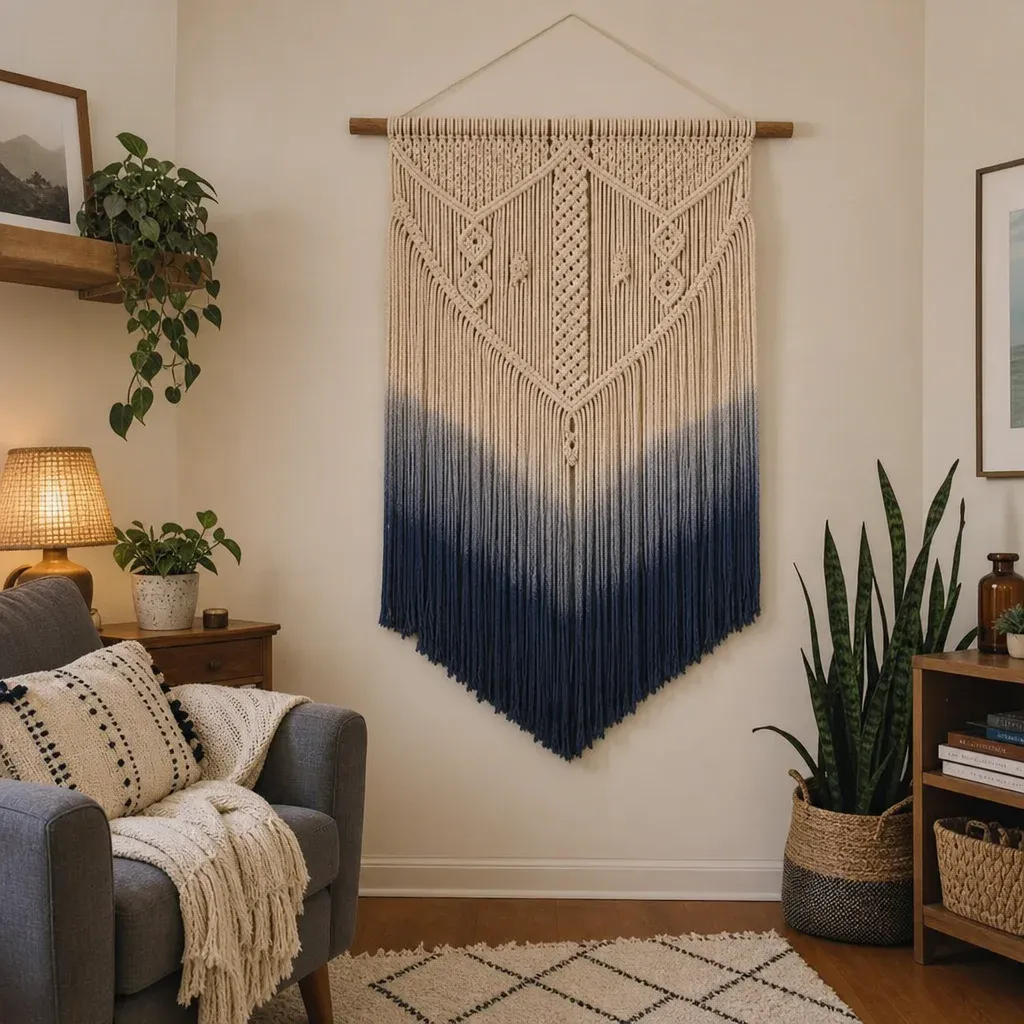
If you would rather make the piece yourself, several crochet room decor projects work in the same vein. On the opposite end of the spectrum, you can warm up a stark, cold room by layering textures with textile wall art. Fabric hangings absorb sound, which is incredibly beneficial in large living rooms with hard flooring. Consider exploring modern macrame wall hanging styles. Gone are the days of dusty 1970s owl designs; today’s macrame features sleek, dip-dyed fringes, intricate geometric knotting, and natural driftwood mounts that bring an earthy, bohemian elegance to your space.
Clever Tricks for Small Spaces and Renters
If your living room is small, your instinct might be to use tiny decor. However, a heavily guarded designer secret is utilizing oversized wall decor for small spaces. Cluttering a small wall with a dozen little frames can make the room feel cramped and chaotic. Conversely, hanging one massive, breathtaking piece of art creates a faux window effect, drawing the eye in and making the room feel infinitely larger and deeply intentional.
For those living in apartments, mastering how to decorate a living room wall hangings comes with the added challenge of protecting the property. Fortunately, there are plenty of rental friendly wall hanging solutions available today:
- Heavy-Duty Adhesive Strips: Brands like Command make strips that can hold up to 20 pounds, perfect for large frames and canvases.
- Tension Rods and Picture Rails: If you have picture molding, use specialized hooks and cords to hang art without a single nail.
- The Leaning Technique: Floating shelves or even just the top of your sofa or mantel are perfect for leaning heavy, layered pieces of art against the wall.
Practical Hardware and Lighting Tips
Once you have your art and layout planned, execution is everything. If you have decided to use large mirrors to expand your space, hanging heavy mirrors on drywall safely is paramount. Never rely on a simple nail hammered into drywall. You must either find a wall stud using a magnetic stud finder or use heavy-duty drywall anchors. Toggle bolts and French cleat brackets are the safest hardware choices, distributing the heavy weight evenly and preventing disasters.
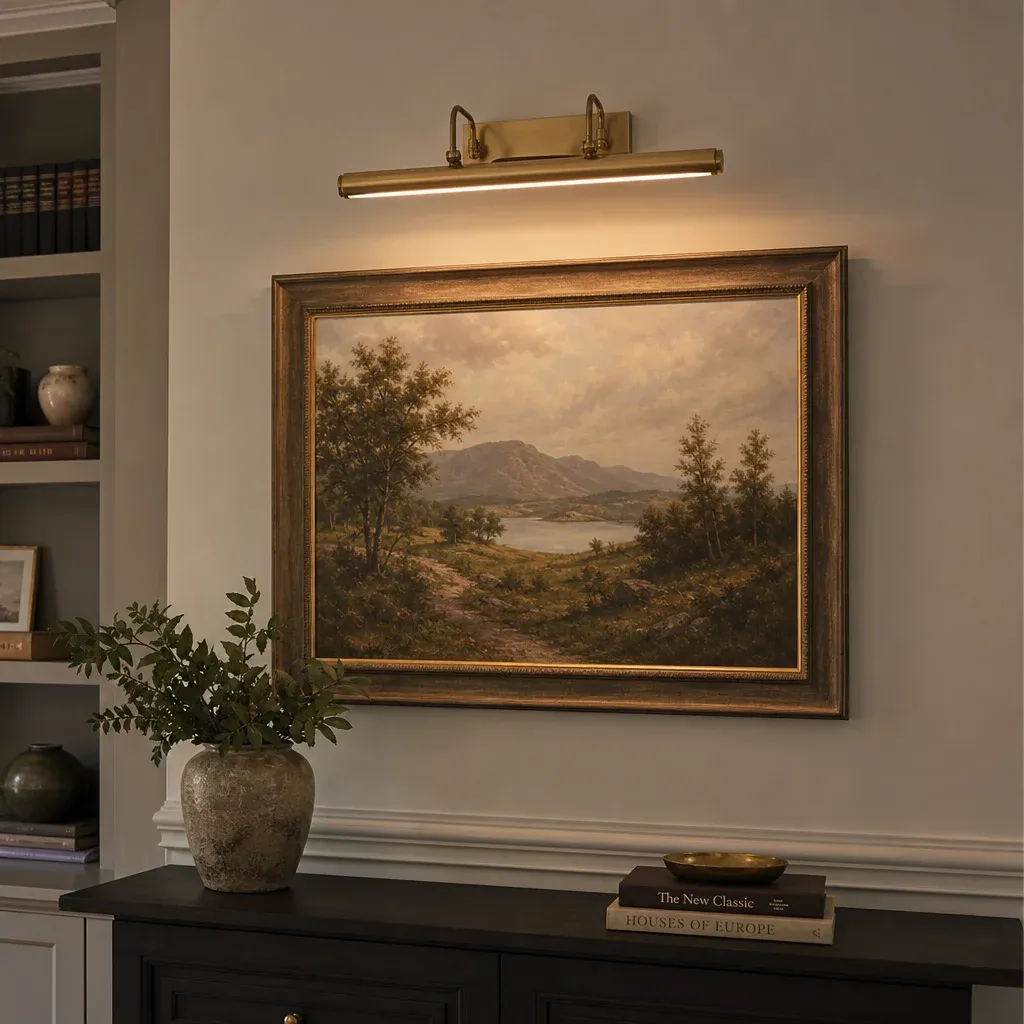
Finally, you can elevate your wall hangings from basic to breathtaking by adding lighting. The strategic use of illumination draws the eye directly to your focal point. You will often have to choose between wall sconces vs picture lights.
Whichever you choose, pay attention to the bulb’s color temperature — warm-toned light around 2700K flatters most art, and the Department of Energy’s lighting guide explains how to read that number off the Lighting Facts label.
- Picture Lights: These are typically mounted directly above a specific frame, casting a warm, downward glow over the canvas. They create an intimate, gallery-like feel. Today, many are battery-operated and remote-controlled, meaning you do not need an electrician to hardwire them.
- Wall Sconces: Flanking a large piece of art or a mirror with matching wall sconces adds symmetry and ambient light to the room. Sconces act as decorative elements themselves and are excellent for filling up horizontal wall space on either side of a central painting.
Conclusion
Transforming your living space doesn’t have to be overwhelming. By understanding foundational guidelines—like the 57-inch rule and proper furniture spacing—you can confidently tackle any blank canvas. Whether you are solving the puzzle of a massive empty wall behind a sofa, choosing between canvas prints and framed photography, or experimenting with tactile macrame and sleek metal sculptures, the secret is intentionality.
Remember to play with scale, utilize proper hardware for safety, and never underestimate the power of good lighting. With these creative ideas in your back pocket, you are well-equipped to curate a living room that feels expertly designed, endlessly inspiring, and uniquely yours.