Have you ever stepped back to admire your beautifully furnished lounge, only to have your eyes drawn to a glaringly empty, unused corner? You are certainly not alone. In the world of interior design, living room corner decor is frequently treated as an afterthought. We tend to focus all our energy on the central seating arrangement, the entertainment center, and the main area rug, leaving the perimeters of our spaces feeling neglected and bare.
However, these overlooked architectural angles hold immense potential to elevate your home’s entire aesthetic. Whether you are wondering how to style an awkward living room gap created by a protruding structural column, or you simply want to add a touch of personality to a dull alcove, the right strategy can turn a dead zone into a stunning focal point.
In this comprehensive guide, we will explore the best modern corner decoration ideas for living room spaces. From cozy retreats to functional storage solutions, let’s dive into practical, stylish ways to bring those neglected edges to life.
Assessing Your Space: The Foundation of Corner Decor
Before you start purchasing furniture or hammering nails into the drywall, it is vital to assess the physical parameters of your room. The most successful interior designs are intentional, taking into account both the flow of traffic and the overall visual balance of the space.
When considering your layout, a critical factor is maximizing small apartment layout efficiency. In compact homes, an empty corner is prime real estate that cannot afford to be wasted. You must decide whether the corner needs to serve a practical function (like storage or a workspace) or if it can be dedicated purely to aesthetics.
Furthermore, take a moment to evaluate the balance of your room through the lens of symmetrical vs asymmetrical furniture placement.
- Symmetrical Placement: If you have a formal, traditional living room, you might want matching decor in the two corners flanking your fireplace or television. This could mean placing identical tall bookshelves or matching potted plants in each corner to create a sense of harmony and order.
- Asymmetrical Placement: For a more relaxed, contemporary, or eclectic vibe, asymmetrical design works wonders. You might place a reading nook in the left corner and a gallery wall on the right. This approach feels organic and keeps the eye moving around the room.
Cozy and Functional: Creating Your Personal Retreat
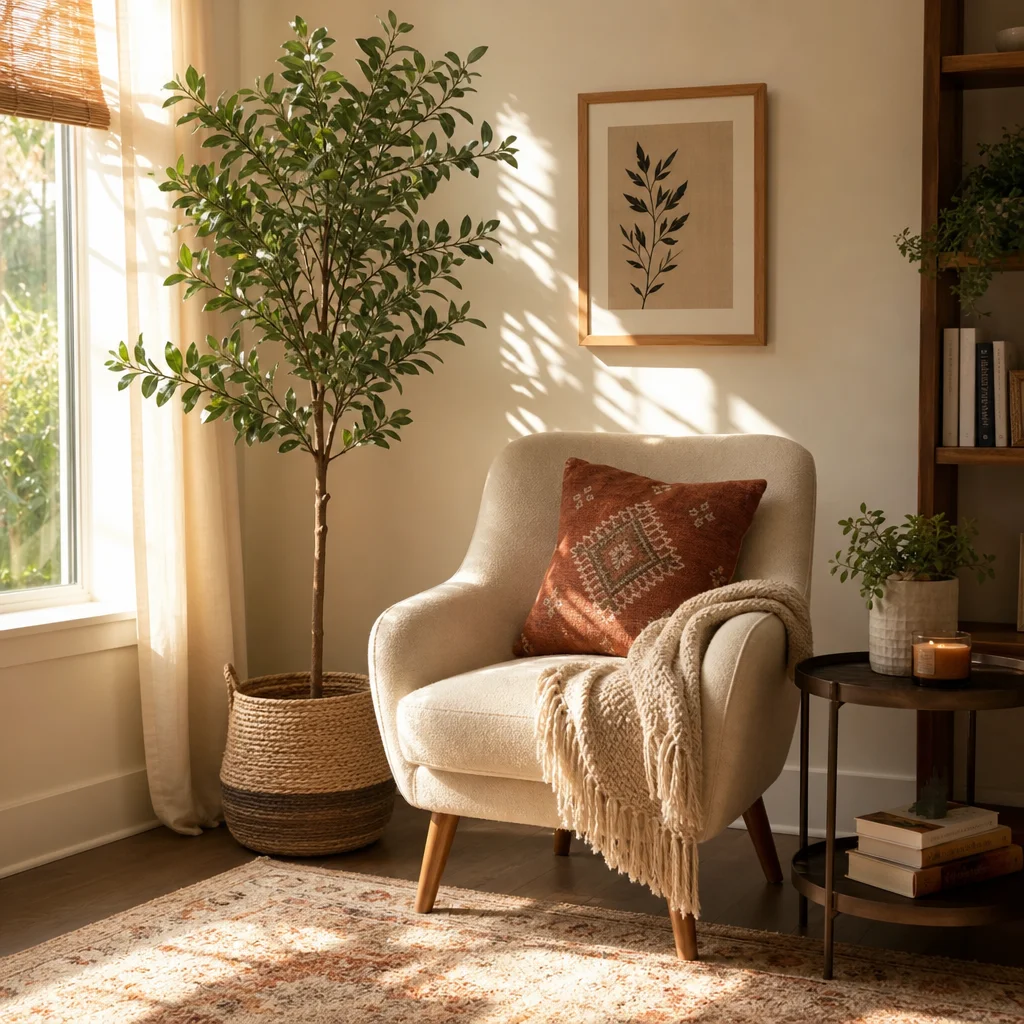
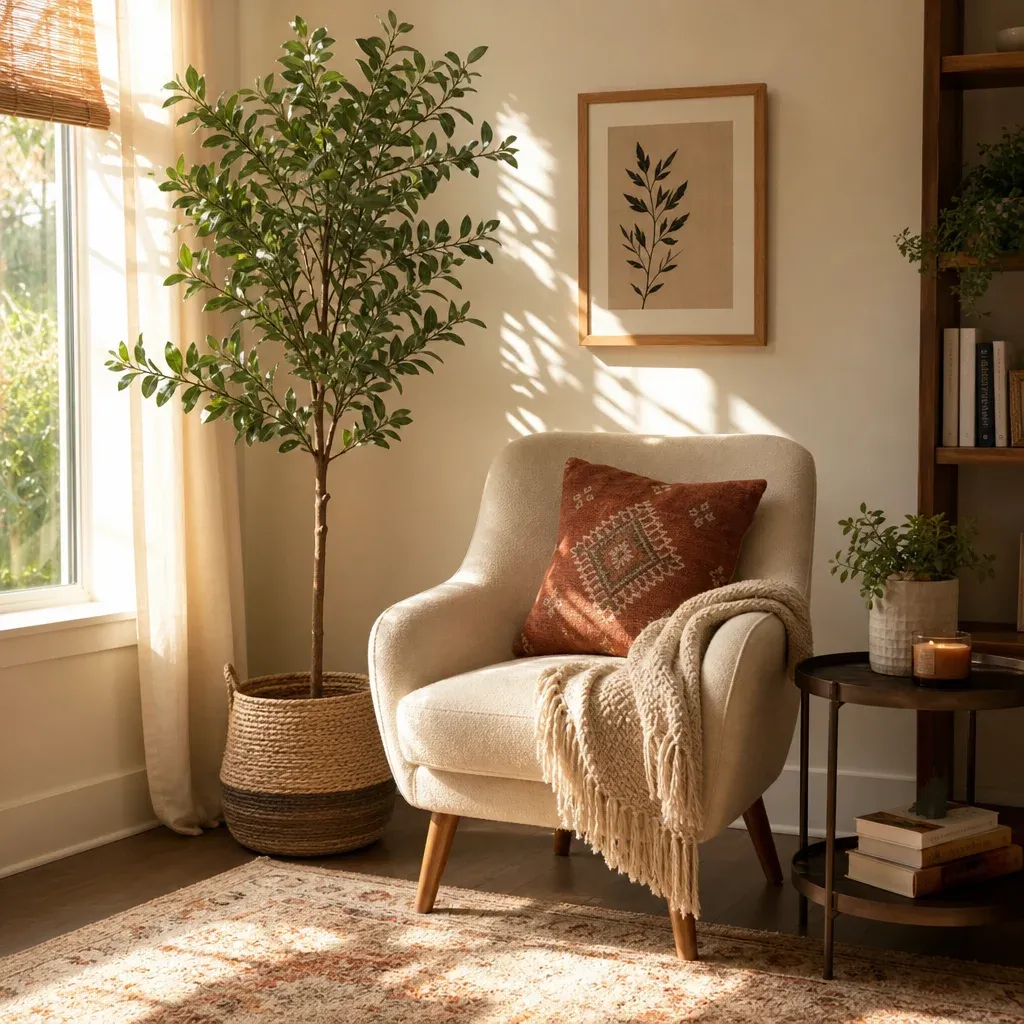
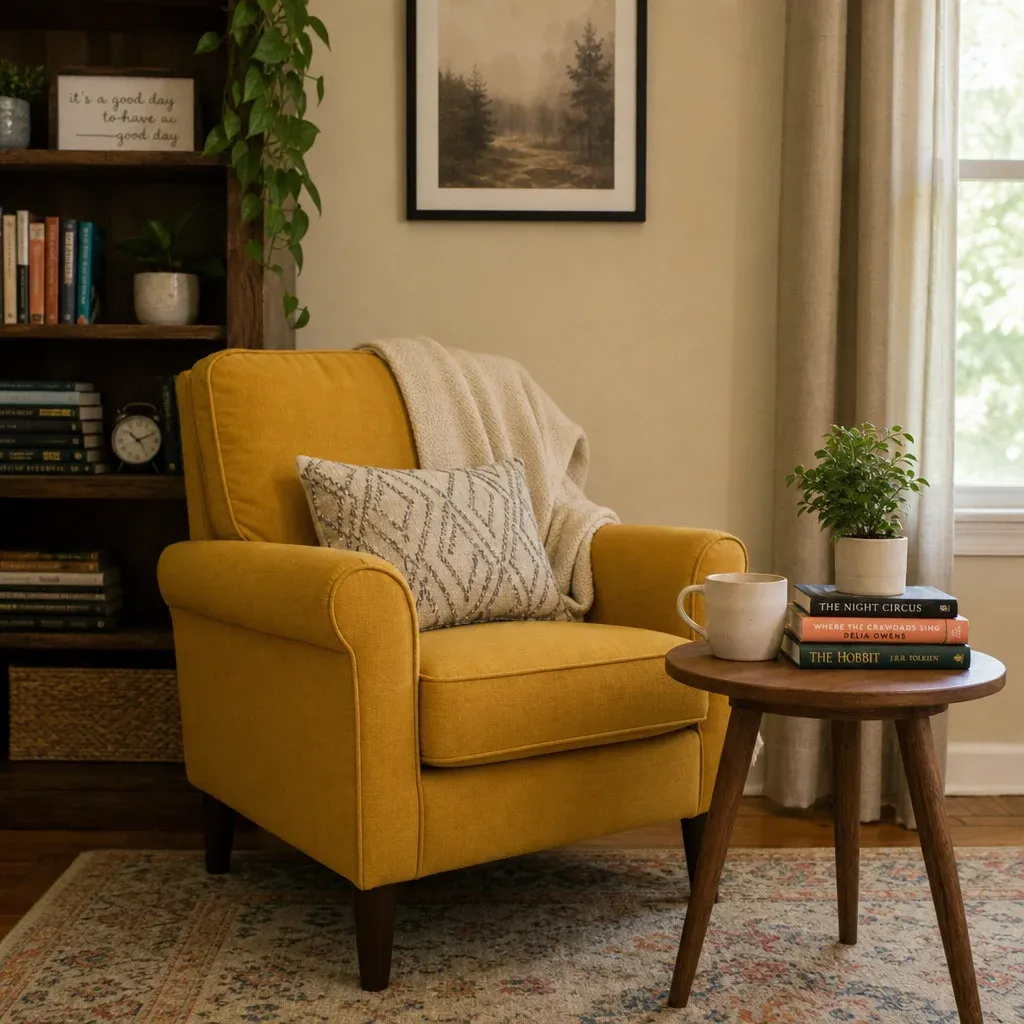
One of the most highly sought-after additions to any home is a quiet place to unwind. Transforming empty corners into reading nooks is an incredibly rewarding way to utilize dead space, providing you with a dedicated sanctuary for morning coffee or getting lost in a good book.
To build the perfect nook, start with the seating. When browsing corner accent chair styling ideas, look for pieces that offer both comfort and visual contrast. If your main sofa is a sleek, low-profile leather piece, consider introducing a plush, tufted velvet armchair in your corner to soften the room. Position the chair at a 45-degree angle facing into the center of the living room; this prevents the setup from feeling isolated and invites conversation.
To complete the nook, layer in a few essential living room corner decorating ideas:
- A Side Table: A small, round pedestal table is perfect for holding a mug of tea or a stack of current reads.
- Textiles: Drape a chunky knit throw blanket over the armrest and add a patterned lumbar pillow for a pop of color.
- A Grounding Rug: A small faux cowhide or circular jute rug placed partially under the chair will visually separate the nook from the rest of the room.
Illuminating the Shadows
A common dilemma many homeowners face is figuring out exactly what to put in a dark living room corner. Corners positioned far from windows can easily become gloomy, making the entire room feel smaller and less inviting.
The most effective solution here is to introduce multiple layers of light. One of the best ways to brighten these shadowy recesses is by incorporating oversized floor lamps for ambient lighting.
Unlike harsh overhead lights, a strategically placed floor lamp casts a warm, sweeping glow that bounces off the intersecting walls, visually expanding the space. Consider an elegant arc lamp with a metallic finish that swoops dramatically over your sofa, or a mid-century modern tripod lamp with a linen shade to add architectural interest. To ensure the corner feels warm and welcoming, always opt for warm white LED bulbs (around 2700K to 3000K) rather than stark, cool-toned lighting — that Kelvin figure is printed on the Lighting Facts label, which the Department of Energy’s consumer lighting guide explains how to read. If the whole room reads dim rather than just the corner, a lighting calculator will give you the total lumens the space actually needs. For a softer, more decorative glow, fairy lights draped along the corner walls are an inexpensive way to add warmth.
Bringing Nature Indoors: Plant Decor
If you are looking for foolproof ideas for decorating corner of living room areas, you can never go wrong with lush greenery. Plants add vibrant color and organic texture that softens harsh architectural lines. It is worth setting expectations honestly here: houseplants are a poor substitute for ventilation, and the EPA’s guidance on improving indoor air quality points to source control and fresh air rather than greenery. Choose them for how they look, and keep them alive by matching each plant to the light your corner actually gets — Illinois Extension’s lighting guide rates common species by the light level they need.
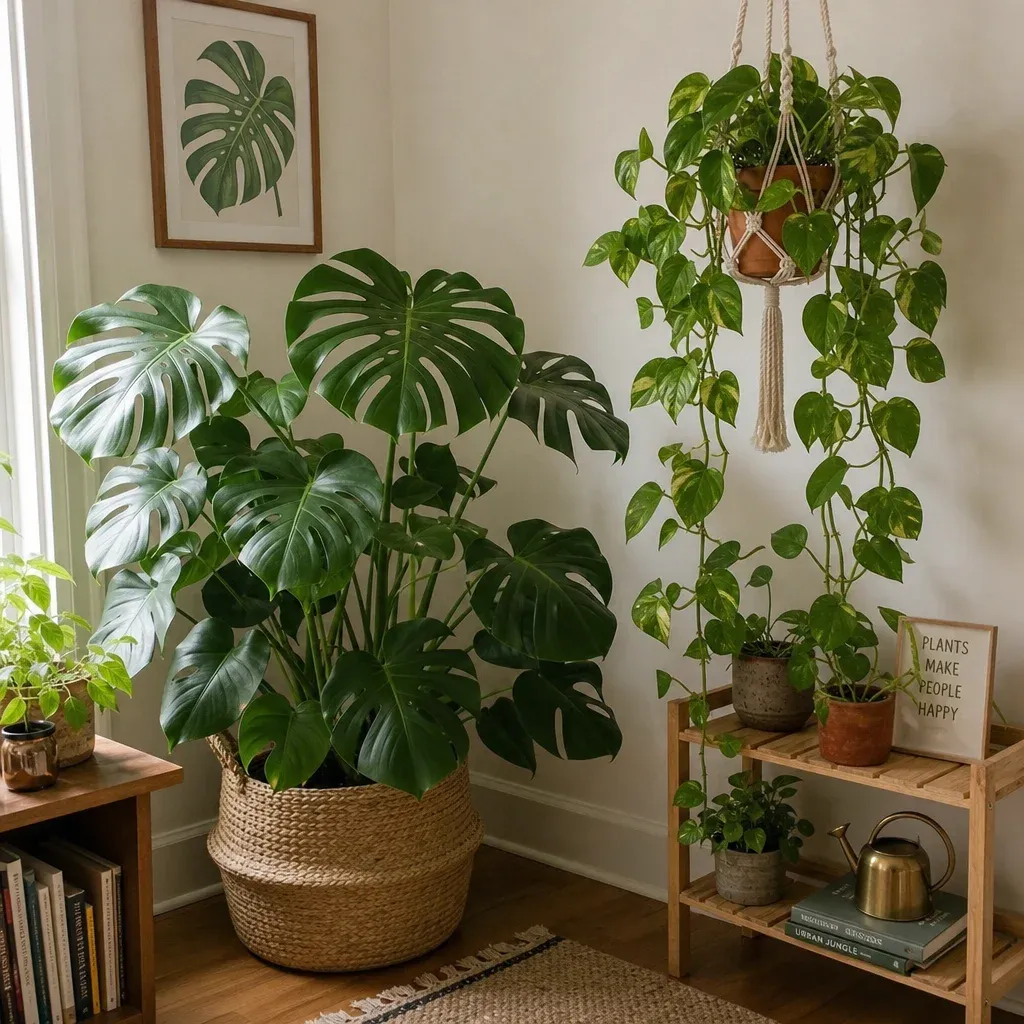
For those working with limited square footage, creating stylish indoor plant arrangements for small spaces is a brilliant strategy. Rather than placing a single, lonely pot on the floor, try grouping plants of varying heights to create a miniature indoor jungle. Use a tiered plant stand to elevate smaller trailing plants, placing medium-sized leafy greens beneath them.
When making your selection, you will often find yourself deciding between hanging planters vs floor pots.
- Floor Pots: Ideal for anchoring a corner. Large, statement-making plants like a Ficus Lyrata (Fiddle Leaf Fig), a towering Monstera Deliciosa, or a Bird of Paradise look spectacular in woven belly baskets or sleek ceramic floor pots.
- Hanging Planters: If you lack floor space, utilize your ceiling. Hanging macrame planters filled with trailing Devil’s Ivy (Pothos) or String of Pearls draw the eye upward, highlighting the height of your room and leaving the floor space below completely clear.
Smart Storage and Display Solutions
Corners are inherently practical spaces for integrating extra storage without encroaching on your main living area. When deciding how to display your favorite books, travel souvenirs, or family photographs, the classic debate is floating shelves vs corner bookcases.
Floating shelves offer a sleek, minimalist aesthetic. Because they lack visible brackets and side panels, they keep the corner feeling open and airy. They are highly customizable, allowing you to stagger them asymmetrically or align them perfectly. On the other hand, a dedicated corner bookcase provides substantial, heavy-duty storage. If you have an extensive personal library or prefer a more traditional, built-in look, a tall wooden corner unit is incredibly efficient.
If you are looking for storage that leans more toward decor than utility, consider utilizing decorative blanket ladders for vertical storage. Leaning a rustic wooden or modern matte-black metal ladder against the wall is an ingenious way to store your seasonal throw blankets. It draws the eye upward, adds cozy texture to the room, and takes up a mere fraction of the floor space that a bulky storage trunk would.
For those who prefer art over objects, the corner is a fantastic canvas. Our full guide to living room wall hangings covers hanging heights and hardware in depth, but here are the steps to create a tiered corner gallery wall:
- Curate Your Collection: Gather a mix of artwork, photographs, and mirrors in frames of varying sizes and finishes.
- Create Templates: Trace your frames onto kraft paper, cut them out, and use painter’s tape to experiment with layouts on the wall.
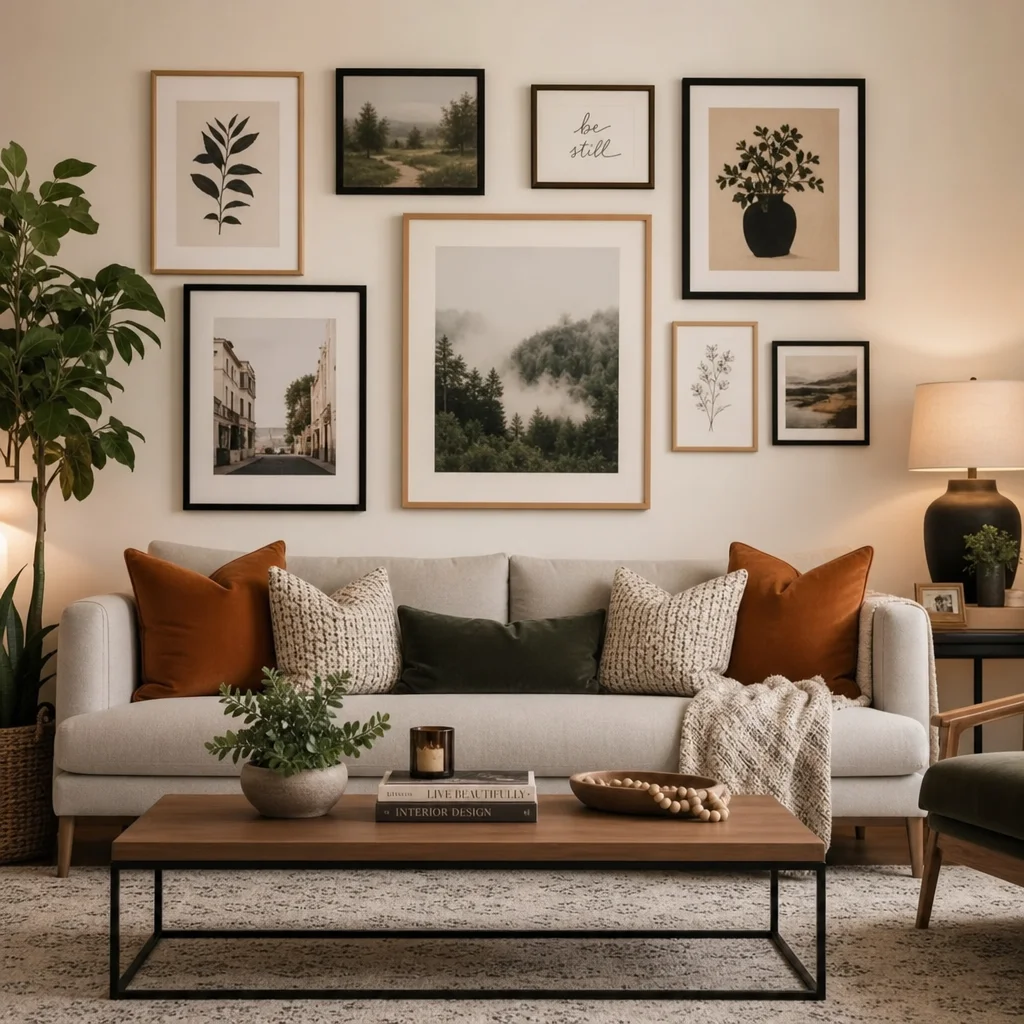
- Wrap the Corner: Start with a prominent “anchor” piece at eye level on one wall, then arrange the remaining pieces outward, intentionally wrapping the collection across the seam of the corner onto the adjacent wall.
- Maintain Spacing: Keep a consistent gap (usually 2 to 3 inches) between each frame to ensure the asymmetrical arrangement still feels intentional and cohesive.
Purposeful and Practical Corner Additions
Sometimes, living room corner decor needs to be highly functional, serving the demands of modern lifestyles. With the rise of remote work, a multi-functional corner desk home office setup is a brilliant way to utilize an empty nook. Choose a compact, triangular floating desk or a minimalist writing table that tucks neatly into the right angle. Pair it with an aesthetically pleasing chair that matches your living room furniture—rather than a bulky, corporate office chair—so the workspace seamlessly blends into your home’s decor when you clock out for the day.
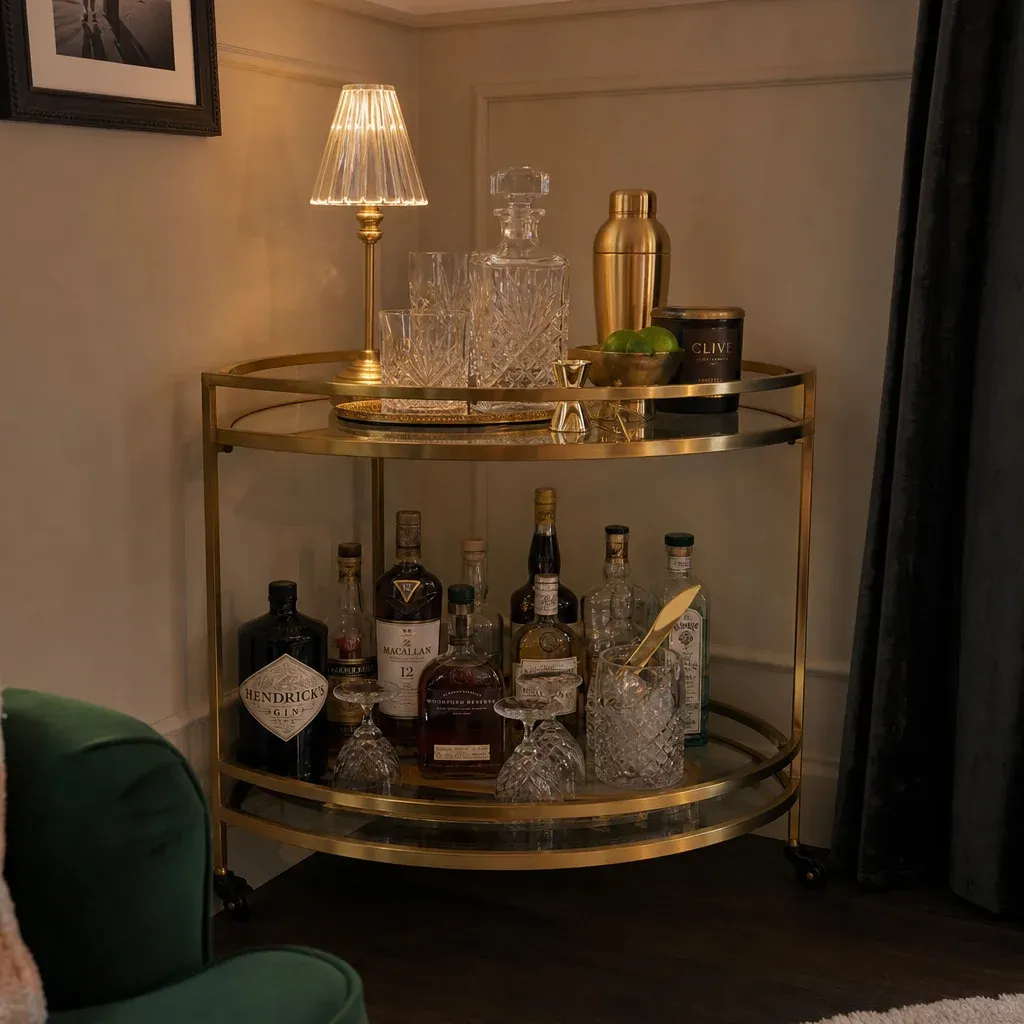
If hosting and entertaining is more your speed, you might want to learn how to arrange a corner bar cart. A rolling bar cart tucked into a gap brings a touch of vintage glamour to your lounge. To style it like a pro:
- Top Tier: Place your most attractive liquor bottles, a crystal decanter, and your essential mixing tools (shaker, jigger, strainer).
- Bottom Tier: Neatly arrange your glassware (coupes, rocks glasses) and perhaps a small stack of cocktail recipe books.
- The Finishing Touch: Add a small battery-operated table lamp or a vase of fresh citrus on the top tier to make the cart feel styled and deliberate.
Finally, if you already have enough seating, lighting, and storage, you might simply want to make an artistic statement. Investing in minimalist sculptural furniture for dead space is an elegant solution. Consider placing a marble display plinth topped with a bold ceramic vase, an abstract wooden statue, or a uniquely shaped geometric accent table. Choosing a sculpture is largely a question of scaling the piece to the space around it. These pieces act as freestanding art, requiring zero maintenance while adding high-end sophistication to the room.
Conclusion
Figuring out exactly how to decorate a corner in a living room does not have to be a frustrating design dilemma. By viewing these empty spaces not as awkward gaps, but as blank canvases, you can unlock entirely new dimensions of style and utility in your home.
Whether you choose to incorporate a sun-drenched reading nook, a cascading vertical garden, or a sophisticated gallery wall, the best living room corner decoration ideas are those that reflect your personal taste while serving your daily needs. The next time you find yourself browsing through corner decoration ideas living room catalogs, remember that the most successful designs blend comfort, lighting, and purposeful styling. Don’t let those edges go to waste—embrace them, and watch your living room transform into a cohesive, beautifully finished masterpiece.